Wondering how to make matcha without lumps or bitterness? Sift about 2 g of powder into a bowl, add 70 ml of hot, not boiling, water, and whisk briskly in a W motion.
This guide sits inside our wider look at japanese tea and sweets.
| Item | Starting value |
|---|---|
| Matcha per bowl (usucha) | 2 g |
| Hot water per bowl | 70 ml |
| Water temperature (one guide) | 80°C |
| Water temperature (another guide) | around 70°C |
| Workable water range | 50-100 ml |
These figures come from Hibiki-an’s preparation page and Tezumi’s usucha guide. They can change, so check the sources before you rely on them.
What you need to make matcha at home
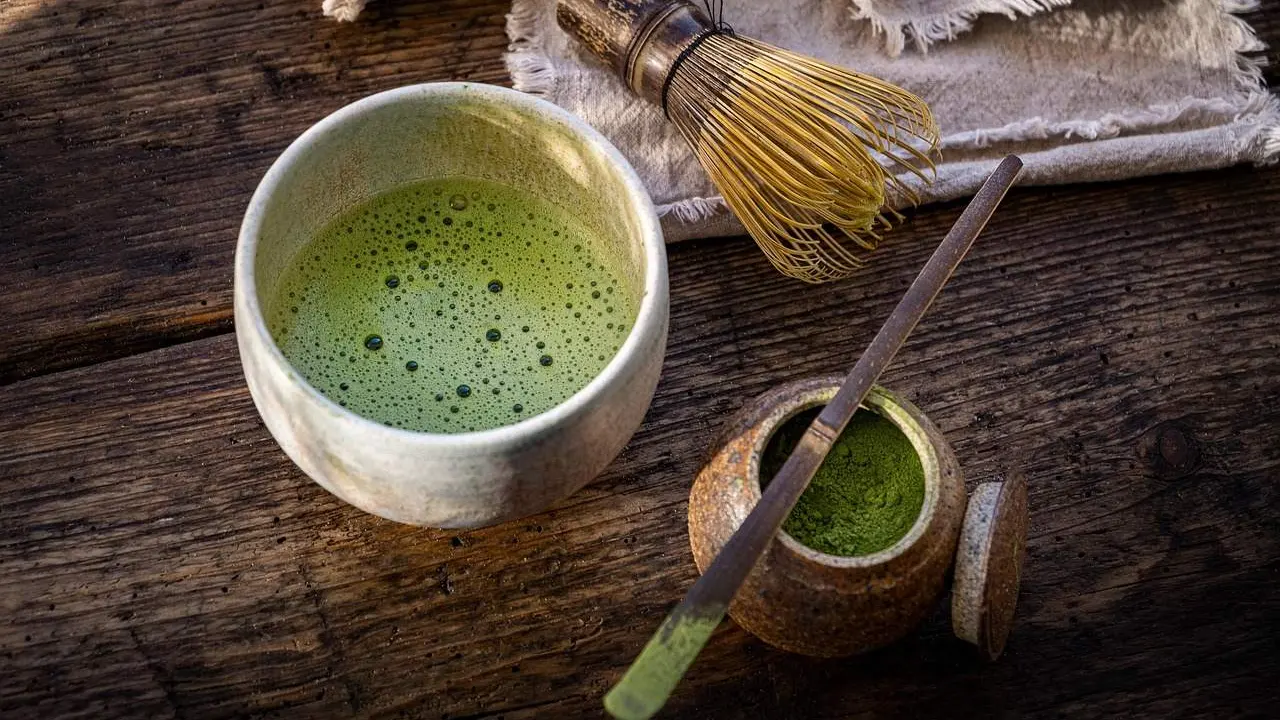
A proper bowl and whisk make matcha easier, but you can begin with simple kitchen tools. Tezumi suggests a tea bowl (chawan), though a cereal bowl will do. A bamboo scoop is ideal, but a teaspoon works.
Here is the basic kit:
- A wide bowl that lets the whisk move freely.
- A scoop or teaspoon for measuring the powder.
- A small metal sieve for sifting.
- A bamboo whisk (chasen); a milk frother can work, but the whisk is the better choice.
- Hot water, and of course the matcha.
The whisk matters most. Its fine bamboo tines break the powder apart and trap air, which is what makes the foam.
Step by step: a bowl of thin tea
Most everyday matcha is usucha, the thin tea. Hibiki-an calls it the standard way to prepare matcha, and it recommends beginners start there.
- Sift the matcha into the bowl. Sifting prevents clumping and gives a smoother foam.
- Measure about 2 g, which Hibiki-an gives as two chashaku scoops or one teaspoon.
- Pour in about 70 ml of hot water.
- Whisk quickly until a rich foam covers the top.
- Drink it soon, while the foam is still there.
Use the scoop to push the powder through the sieve. Sifting helps prevent clumping.
Water: how much and how hot?
Water is where guides disagree a little, so treat the numbers as a starting point. Hibiki-an says the temperature should be 80°C. Tezumi says ideally around 70°C.
The aim of both is the same: hot but not boiling. Boiling water can make the tea taste harsher, so let the kettle rest for a moment before you pour.
On volume, Tezumi says to use between 50 and 100 ml depending on taste. More water gives a weaker tea, which can suit beginners. It also makes foam harder to produce, so start near 70 ml and adjust from there.
Adjusting to your taste
Change one thing at a time. If the tea tastes too strong, add a little more water next time. If the foam is thin, use slightly less water or whisk with more energy.
Whisking technique for good foam
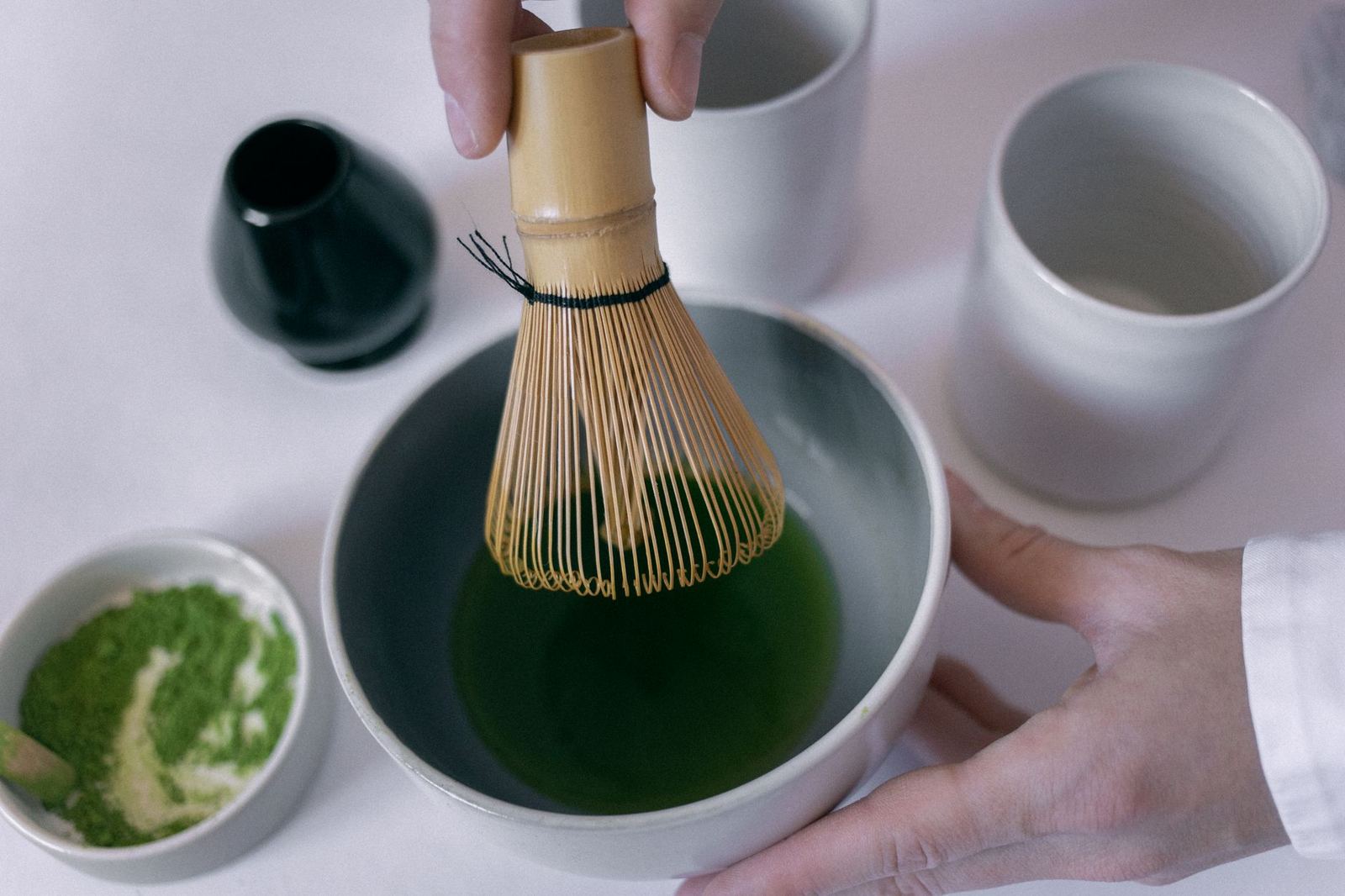
Hibiki-an advises moving the bamboo whisk quickly, as if writing the letter “W”. It adds that this is not a circular stirring motion.
Keep your wrist loose and let the tines skim the surface of the tea. Lift slightly toward the surface so the foam turns fine and even.
If you only have a frother, the same ideas apply: sift first, use a wide bowl, and whisk until the surface is covered in small bubbles.
Thin tea or thick tea?
The other style is koicha, a strong tea. Hibiki-an says traditionally it is for tea ceremony and other special events. For a first bowl, usucha is the better choice.
Once you are comfortable, you may want to compare matcha with other roasted or green teas. Our guide on matcha vs hojicha explains how they differ in flavour.
Matcha also pairs well with sweets and baked treats. If you like nutty, toasty flavours alongside your tea, read what is kinako for an idea of what suits it.
Common problems and quick fixes
- Lumps: sift the powder to help prevent clumping, as Tezumi advises.
- Little foam: use a bit less water and keep the whisk moving quickly in a W, not a circle.
- Harsh taste: the water was probably too hot, so let it cool below boiling.
- Weak taste: use less water or a little more powder.
After a few bowls, you will learn what your own taste prefers. Keep notes on the water amount and temperature you used.
How to make matcha taste better each time
Small habits add up. Measure the powder rather than guessing, because even a little extra changes the strength of a bowl this small. Use the same bowl and scoop for a week so you can compare results fairly.
A simple routine to follow
- Heat the water, then let it cool a little below boiling.
- Set the bowl, scoop, sieve and whisk within reach.
- Sift, measure and pour.
- Whisk in a W until the foam is fine.
- Drink it, then rinse your tools straight away.
Having everything ready matters because the foam does not last. Whisking and drinking in quick succession gives you the best texture.
Looking after your tools
A bamboo whisk is delicate, so treat it gently. Rinse it in clean water after use and let it dry in the open air, ideally with the tines standing free. Avoid scrubbing it with soap, which can leave a taste behind.
The sieve and bowl need only a quick wash. Matcha powder is very fine, so rinse the sieve soon after you use it, before the powder dries and clogs the mesh.
Look after the tools and they will give you a steady result for many bowls.
Choosing and storing your powder
Hibiki-an notes that high grade matcha is ground into a very fine powder, which is why it makes a rich foam when whisked. A finer powder also blends more smoothly, so you notice the difference most in a plain bowl.
Keep the tin closed and away from heat and bright light between uses. Matcha is a fine powder, and it dulls in colour and aroma the longer it sits open. Buy an amount you will actually finish, and scoop it with a dry spoon every time.
If your tea tastes flat or dusty, the powder itself may be old, and no technique will fix that. Try a fresh tin before you blame your whisking.
Ideas for using your matcha
Once the basic bowl feels easy, you can use the same method as a base for other drinks and sweets. Some people add the whisked tea to warm milk. Others keep it plain and enjoy it next to a small sweet.
A bitter, grassy tea balances sugary treats well. That is why matcha shows up so often next to Japanese confectionery. Start simple, taste carefully, and change one detail at a time.
Frequently asked questions
How much matcha do I use for one bowl?
Show answer
Hibiki-an suggests 2 g of matcha for a bowl of usucha, which is one teaspoon or two chashaku scoops.
Does the water need to be boiling?
Show answer
No. Hibiki-an gives 80°C and Tezumi says around 70°C, so aim for hot but below boiling.
Do I really need to sift matcha?
Show answer
Yes, it is worth the effort. Tezumi calls sifting a very important step because it helps prevent clumping and gives a smoother foam.
Can I use a milk frother instead of a bamboo whisk?
Show answer
It can work, according to Tezumi, though the company highly suggests getting a bamboo whisk.