Standing at the tea shelf, unsure which to buy? In the matcha vs hojicha choice, matcha is grassy, bright and more caffeinated, while hojicha is roasted, nutty and gentle enough for evenings.
This guide is part of our look at japanese tea and sweets.
| Item | Value |
|---|---|
| Matcha caffeine | 40 – 70 mg / 100 mL |
| Coffee caffeine (for comparison) | 60 mg / 100 mL |
| Sencha caffeine (for comparison) | 20 mg / 100 mL |
| Hojicha raw material | Roasted bancha or kukicha tea |
| Hojicha suggested brewing temperature | 82 °C (180 °F) |
Figures come from ITO EN’s caffeine guide and Wikipedia’s Hōjicha entry. They can change and vary by brand and preparation, so check the sources before you rely on them.
What is the real difference between matcha and hojicha?
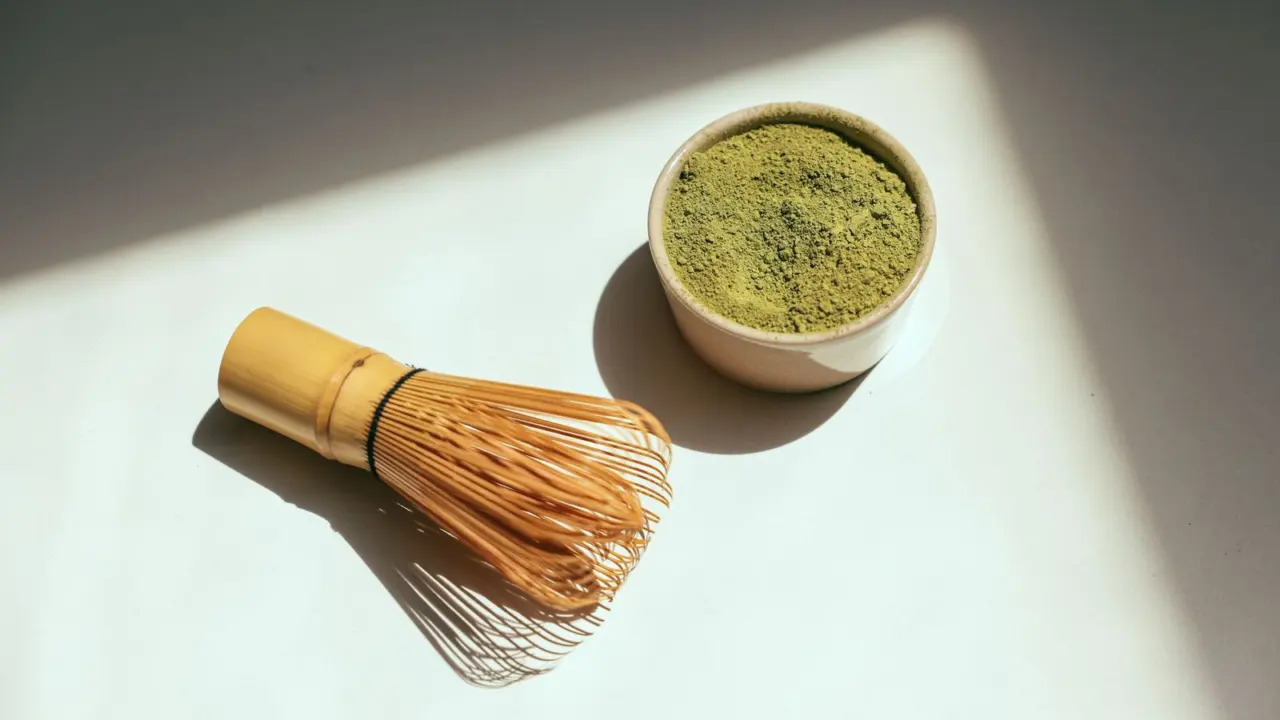
Both come from the tea plant, but they are treated very differently. Matcha is a powder you whisk into water and drink whole, so you take in the entire leaf.
Hojicha is roasted green tea. According to Wikipedia’s entry (a general reference, not a tea authority), it is usually roasted bancha or kukicha tea, often used as an after-dinner tea.
Kukicha is made mainly from twigs and stems of the tea plant, which helps explain hojicha’s soft character. You will also find hojicha sold as a powder, which is how it ends up in lattes and bakes.
Flavor: grassy versus toasty
Matcha tastes fresh and vegetal, with a savory edge that some people find bitter. Hojicha goes the other way: the roasting gives it a toasty, caramel-like warmth.
Wikipedia describes hojicha infusions as light- to reddish-brown and less astringent, and says the tea has little to no bitterness. It also gives a mild, smoky flavour when brewed with water at 100 °C (212 °F).
- Matcha: green, grassy, rich and sometimes bitter.
- Hojicha: toasty, nutty, smoky and smooth.
- Color: vivid green versus reddish-brown.
The same source says hojicha is less astringent because the tea loses catechins during high-temperature roasting. Its colour shifts from green to reddish-brown for the same reason.
Which has more caffeine?
Matcha has the clear edge. ITO EN lists matcha at 40 – 70 mg per 100 mL, and notes this varies by the amount of powder used. It gives one example of 48 mg from 1.5 g of powder in 70 mL of hot water.
For comparison, the same table lists coffee at 60 mg per 100 mL and sencha at 20 mg per 100 mL. A strong bowl of matcha can therefore sit close to coffee.
No reliable primary measurement for hojicha turned up in our research, and retail sites quote very different numbers. Treat hojicha as the milder choice, not a caffeine-free one.
ITO EN also cites the U.S. FDA’s figure of about 400 mg per day as the recommended maximum for healthy adults.
Using each in drinks and sweets
Matcha is the classic choice when you want a bold green color and a slightly bitter note to balance sugar. Think ice cream, cakes and chocolate.
Hojicha powder and leaves work in many desserts, according to Wikipedia: cookies, ice cream, roll cake, nama chocolate, muffins, tiramisu, chiffon cake, pudding, pancakes and cheesecake. It is gentler, so it suits milky or buttery bakes.
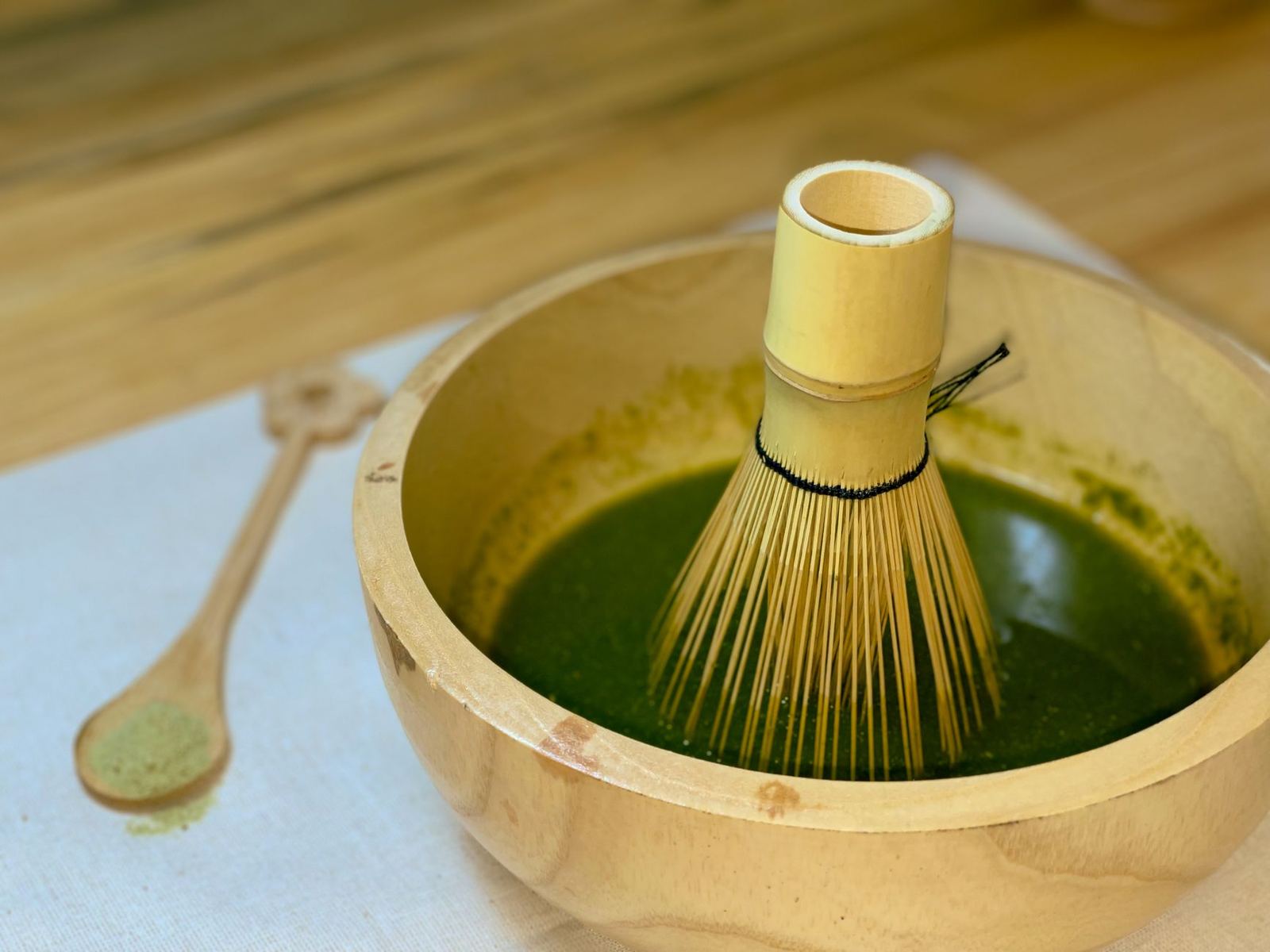
If you want to try matcha at home, our guide on how to make matcha walks through the whisking. For a cozy, lower-stimulation cup, try the hojicha latte recipe shows how well the roasted flavor pairs with milk.
Preparing matcha and hojicha
Matcha is whisked, not steeped. You mix the powder into hot water until it is smooth and frothy, and the powder stays in the cup. That is why the caffeine you get depends so much on how much powder you use.
Hojicha leaves are steeped like most loose-leaf teas, then strained. Wikipedia’s infobox gives a brewing temperature of 82 °C (180 °F) and a time of 30 sec to 3 minutes, and notes the tea can also take water at 100 °C (212 °F).
- Decide whether you want a whisked powder (matcha) or a steeped leaf (hojicha).
- Measure carefully, since a stronger matcha means more caffeine per cup.
- Taste before adding milk or sweetener, then adjust.
Because matcha is consumed whole, small changes in the spoonful make a visible difference in both strength and taste. Start light, and add more powder only if you want a bolder bowl.
Hojicha is forgiving. Its low bitterness means a slightly longer steep rarely turns harsh, which makes it a relaxed tea for beginners.
Why roasting changes hojicha
Most Japanese green teas are steamed to stop oxidation. Hojicha instead is roasted, which is what changes its color and flavor.
Wikipedia states that it is roasted at 150 °C (302 °F) to prevent oxidation and produce a light golden colour, and that it is traditionally roasted in a porcelain pot over charcoal. It adds that the tea is fired at a high temperature, shifting the leaf from green to reddish-brown.
That roasting step is the reason the two teas feel so unlike each other in the cup. One stays green and fresh, and the other turns warm and toasty.
Which one should you choose?
Pick by the moment. Matcha suits mornings and focus, while hojicha suits evenings.
- Choose matcha for a vivid color, a grassy taste and a caffeine lift.
- Choose hojicha for a smooth, roasted taste and a calmer cup.
- Choose either for baking, matching the flavor to the dessert.
A simple way to decide is to think about what the cup or dessert needs. If sugar, cream or white chocolate is doing most of the work, matcha adds contrast with its green, slightly bitter edge.
If the recipe is already rich, such as a buttery cookie or a milky pudding, hojicha tends to blend in and add warmth instead of competing. Many people keep both in the pantry for exactly this reason.
Wikipedia notes that, because of its mildness, hojicha is popular to serve during the evening meal, before sleep, and is preferred for children and the elderly. If caffeine is a medical concern for you, ask a health professional.
Frequently asked questions
Is hojicha a type of matcha?
Show answer
No. Hojicha is roasted green tea, usually made from bancha or kukicha, while matcha is a whisked powder of the whole leaf. Hojicha can be ground into a powder, but it is still a different tea.
Does hojicha have less caffeine than matcha?
Show answer
The cited evidence does not establish a caffeine comparison. Matcha is listed at 40 – 70 mg per 100 mL. Wikipedia describes hojicha as popular during the evening meal and before sleep.
Can I swap one for the other in recipes?
Show answer
You can, but expect a different result. Hojicha gives a toasty, mellow flavor and a brown tint, while matcha gives green color and a grassy, bitter edge.
What temperature should I brew hojicha at?
Show answer
Wikipedia’s infobox lists 82 °C (180 °F) for 30 seconds to 3 minutes. It also notes a mild, smoky flavour with water at 100 °C (212 °F).