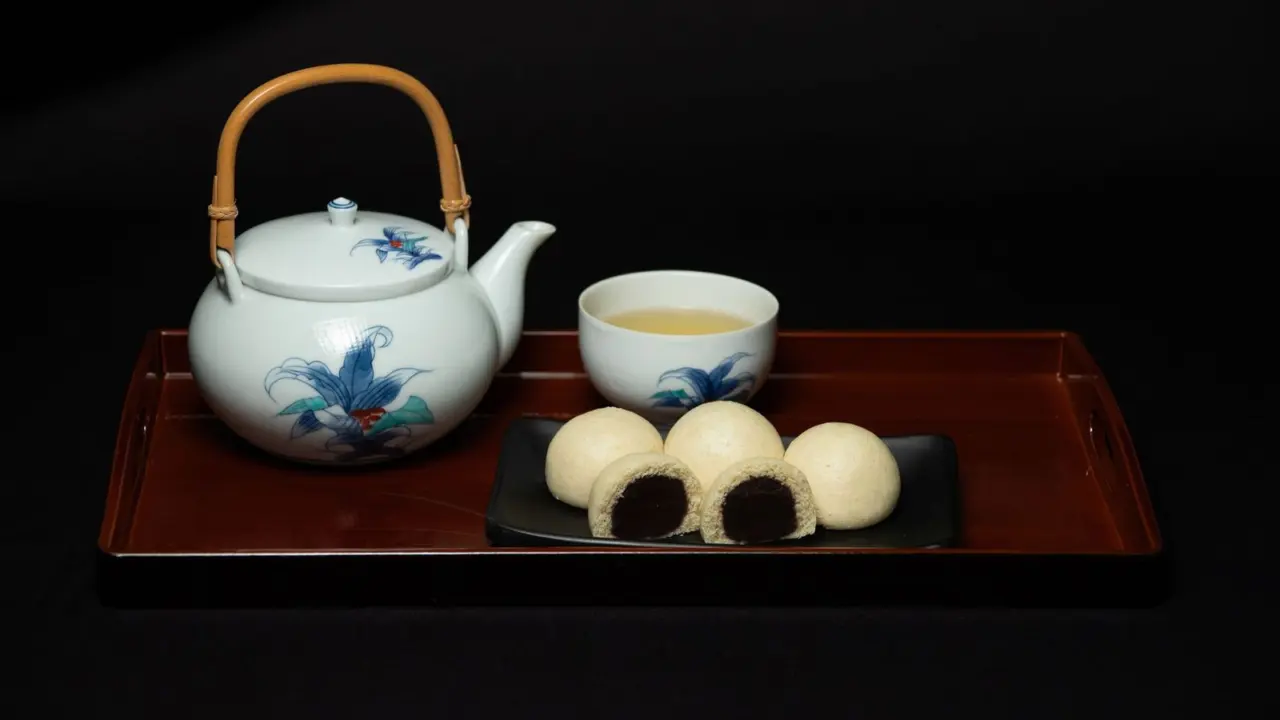
Wondering what to sip with a bowl of red bean sweets? Japanese tea and sweets work as a pair because bitter, grassy tea balances sugar, and matcha with wagashi is the classic match.
| Item | Value |
|---|---|
| Classic pairing | Matcha with wagashi |
| Matcha caffeine | About 60 mg per 100 ml |
| Regular sencha caffeine | About 20 mg per 100 ml |
| Hojicha caffeine | About 20 mg per 100 ml |
| Genmaicha caffeine | About 10 mg per 100 ml |
Caffeine figures come from Yamamotoyama’s hojicha column and the pairing from ITO EN’s pairing guide. Figures can change with leaf, brewing and serving size, so check the sources before you rely on them.
Why tea and sweets belong together
In Japan, tea is rarely a lonely drink. A small sweet beside a cup of green tea is an old habit, from the formal tea room to a desk at work. Many Japanese sweets are not very sweet by Western standards, so they leave room for the tea to speak.
The logic is flavor balance. Japanese green tea carries three main flavor components, as ITO EN puts it: “catechins, which contribute astringency; caffeine, which adds bitterness; and amino acids, especially L-theanine and glutamic acid, which contribute umami and gentle sweetness.” A sweet bean paste or a chewy rice cake softens the astringency, and the tea in turn cleans your palate between bites.
The same source says the best matcha pairings “either balance that bitterness or deliberately contrast with it.” That gives you two strategies, and you can use either one at home. Match a bitter tea with a sweeter treat, or pair a gentle tea with something nutty and toasty so neither side wins.
This hub walks through the main teas, the sweets that suit them, the traditions behind the pairing and a few ways to bring it home. If you are new to the sweets themselves, our guide to japanese desserts covers the wider field.
The main Japanese teas you will meet
You do not need a shelf full of tea to start. Four or five types cover almost every pairing, and each one has a clear personality.
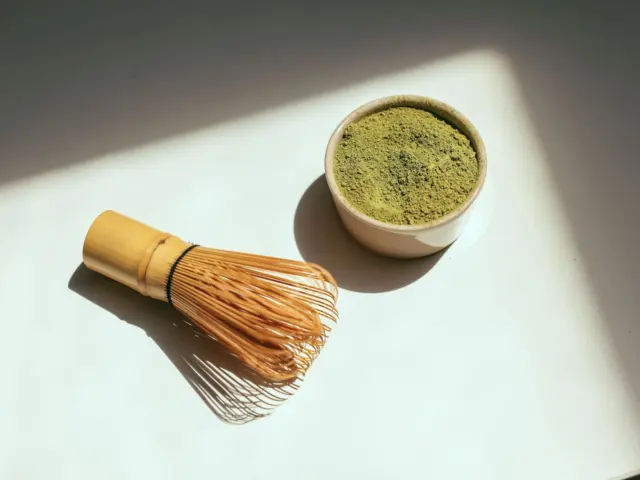
- Matcha: powdered, whisked tea with a bold, vegetal, umami-rich taste and a gentle bitterness.
- Sencha: the everyday leaf tea, bright and fresh. ITO EN calls it “the most widely consumed green tea in Japan.”
- Hojicha: green tea roasted over high heat, which gives a toasty, caramel-like cup.
- Genmaicha: green tea blended with toasted rice, with a cereal-like, almost popcorn aroma.
- Gyokuro: a shaded, high-grade tea that is rich in umami and the most caffeinated of the group.
Roasting changes the cup. Yamamotoyama notes that hojicha is made by roasting popular green teas such as sencha and bancha “over high heat until golden brown.” The roasting brings the nutty, smoky notes that many people want with chocolate, caramel or baked sweets.
Genmaicha has its own story, and our explainer on what is genmaicha goes through the rice, the leaf and how to brew it. For the roasted side, the matcha vs hojicha comparison helps you choose between the two most popular sweet-friendly teas.
How much caffeine is in each tea?
Many people assume hojicha is far lower in caffeine than sencha. Yamamotoyama says that, compared with regular sencha, “the amount of caffeine in hojicha is roughly the same.” It lists about 20 mg per 100 ml for both, 60 mg for matcha, 160 mg for gyokuro and 10 mg for genmaicha.
The same page says the specific amount “varies slightly depending on the type of tea leaves and brewing method.” If you want a calm evening cup with dessert, genmaicha or a lightly brewed hojicha is a reasonable choice, though a lower figure is not a guarantee.
Wagashi: the sweets made for tea
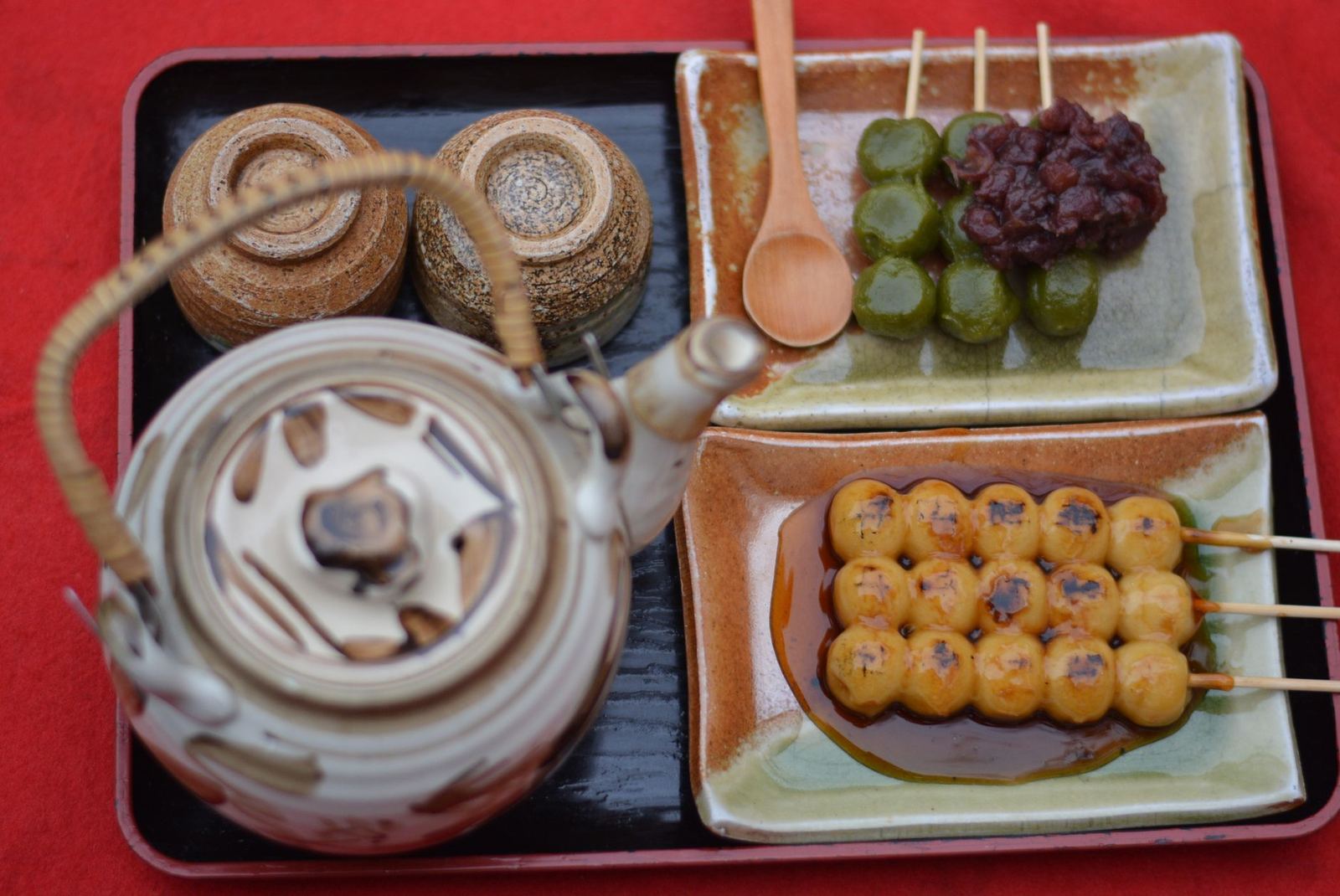
Wagashi are the traditional confections that grew up beside tea. Japan Objects describes them as “traditional Japanese confections, typically made from various types of rice or wheat flour, sugar, nuts, beans and starches.” They are often linked to tea ceremonies, celebrations and holidays, and are also enjoyed at home or at work with a cup of matcha.
Here are the types you will see most often:
- Namagashi: “raw sweets,” described as the most popular wagashi and often served at tea ceremonies.
- Nerikiri: small hand-molded sweets made from white bean paste and glutinous rice flour.
- Dango: round rice-flour dumplings, usually stacked on a skewer with a sweet and savory glaze.
- Dorayaki: two fluffy pancakes around red bean paste.
- Yokan: a thick bar of gelled azuki beans.
Most of these rely on sweet bean paste, which has a mellow, earthy sweetness rather than a sharp one. That is why they sit so well beside a strong tea. If you like the toasted soybean flavor in some rice sweets, our page on what is kinako explains that ingredient.
Which wagashi go with thick and thin matcha?
In a tea ceremony, the sweet follows the style of the tea. My Japanese Green Tea explains that “Wagashi served with usucha (薄茶, thin matcha) is called higashi (干菓子), a dry sweet.” It adds that wagashi served with koicha (濃茶, thick matcha) is called omogashi, “often made of bean paste, sesame, rice, sweet potato and sugar.”
The reasoning is simple. Thick matcha is intense, so it gets a moist, substantial sweet. Thin matcha is lighter, so a dry sweet that melts away is enough.
Traditions around serving tea and sweets
Wagashi are associated with tea ceremonies, celebrations and special occasions.
Season is the other big theme. My Japanese Green Tea says that in a tea ceremony “the small wagashi lets us appreciate the seasonal changes,” and Japan Objects calls wagashi culture an edible art form that embodies “the spirit of harmony and seasonality.” Cherry blossom shapes in spring, cool jelly in summer and chestnut or maple motifs in autumn are common examples.
You can borrow these habits without a tea room:
- Look at the sweet for a moment before you eat it.
- Eat a small bite, then let it fade.
- Take a sip of tea and notice how the flavor changes.
- Repeat slowly, rather than alternating quickly.
Everyday tea breaks versus formal occasions
Outside the tea room, the habit is much more relaxed. Japan Objects notes that wagashi are regularly enjoyed at home or at work with a cup of matcha. A tea break with a small sweet is a way to pause, not a performance, and nobody expects a perfect bow or a hand-whisked bowl.
That relaxed spirit is the best way to start. Use the cup you already own, pick a sweet you like and treat the first sip as a small reset in your day. If the ritual appeals to you later, you can add the seasonal touches one at a time.
Reading the seasons through sweets
Because wagashi follow the calendar, the same shop can offer very different sweets as the months change. Colors, shapes and ingredients shift with the weather and with festivals. You can borrow the idea at home without any special skills.
- Spring: soft pinks and greens, and shapes that suggest blossoms.
- Summer: clear, cool, jelly-like sweets that look refreshing.
- Autumn: warm tones, chestnuts, sweet potato and leaf shapes.
- Winter: richer, denser sweets and a hot cup of roasted tea.
These are broad patterns rather than fixed rules, and shops vary. Even so, matching your tea to the weather is a pleasant way to practice the idea. A chilled tea suits a hot day, and a steaming hojicha suits a cold one.
How to pair tea with sweets at home
Start with the tea and ask what the sweet needs. A rich, dense sweet wants a sharper or more bitter tea, and a delicate one wants a gentle tea. Our detailed page on japanese tea pairing with sweets goes deeper, and this short list gives a starting point.
- Matcha with bean paste sweets: the classic route, where sweetness answers bitterness.
ITO EN also lists the classic match as matcha with wagashi, and notes traditional and modern pairings for each tea. Treat these as suggestions, since taste is personal.
Temperature changes things too. A hot cup suits chewy or cold sweets, while a cooled tea suits something rich. If you want to brew your own bowl, the guide on how to make matcha covers the whisking.
Sencha and the everyday cup
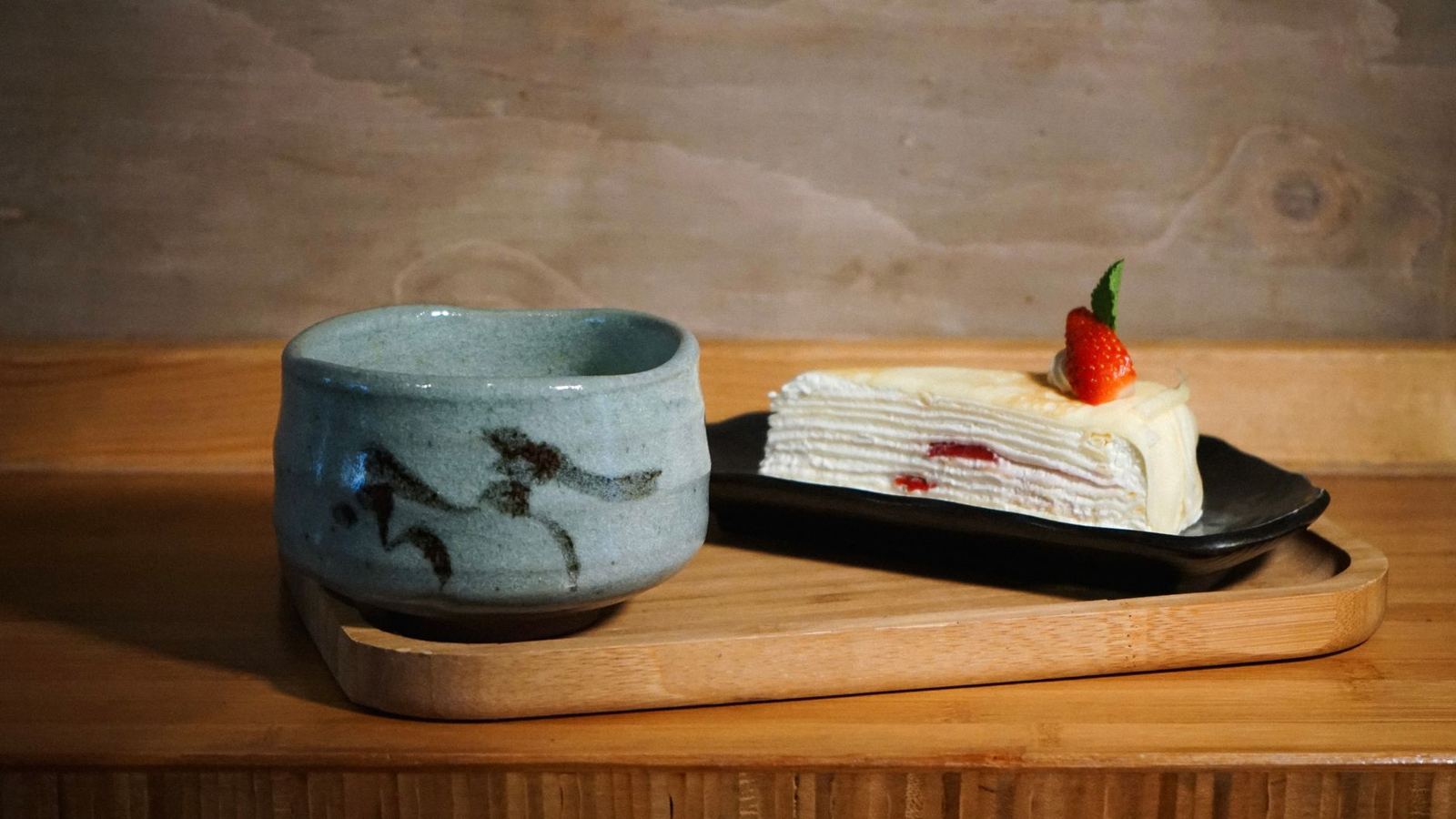
Matcha gets the spotlight, but most Japanese households drink leaf tea. ITO EN describes sencha as “characterized by its balanced, grassy flavor, light sweetness, and mild astringency.” It also says that sencha “often works as a refreshing palate reset between bites.”
That palate-reset quality is exactly what you want with sweets. A cup of sencha does not compete with the dessert; it wipes the slate clean so the next bite tastes as good as the first. This is why a plain, lightly sweet rice cake or a small piece of fruit jelly feels natural beside it.
Brewing is forgiving enough for beginners. Use fresh, not boiling, water, give the leaves a short steep and pour every drop so the tea does not turn bitter. A bitter cup can still pair with a very sweet dessert, but a clean one is more versatile.
When sencha is not the right choice
Very rich, creamy or chocolate-heavy desserts can overwhelm a delicate sencha. In those cases a roasted tea holds its own. Hojicha, with its caramel-like depth, is the easier partner for butter cakes, cookies and custard puddings.
Common mistakes with tea and sweets
A few small habits spoil an otherwise good pairing. Most are easy to fix once you know what to look for.
- Pairing sweet with sweet: a sugary tea latte and a very sweet cake flatten each other. Keep one side plain.
- Brewing too hot: water straight from a boil can make green tea harsh. Let the kettle rest for a moment.
- Serving too much: wagashi are small on purpose. A big plate makes the tea an afterthought.
- Ignoring the season: a cool, jelly-like sweet in a warm month, or a hearty chestnut sweet in autumn, feels right without any effort.
- Old tea: tea that has sat open for months tastes flat, and no sweet will rescue it.
None of these are strict rules. Think of them as ways to keep the tea and the sweet in conversation rather than in competition.
Putting together a simple tea-and-sweets tray
You can build a small tea moment from just a few items. Choose one tea, one sweet and one thing to look at, such as a pretty plate or a seasonal flower. The visual part matters because Japan Objects describes wagashi as an edible art form.
- Pick the tea first, based on your mood: bold matcha, fresh sencha, cozy hojicha or toasty genmaicha.
- Choose a sweet that answers it: bean paste for matcha, a light rice sweet for sencha, a baked treat for hojicha.
- Serve a small portion and a small cup, so the tea stays hot and the sweet stays special.
- Take your time, and take a sip between bites.
If you cannot find wagashi nearby, a homemade bake is a fine substitute. Plain shortbread, a sesame cookie or a simple pound cake all sit well with roasted tea. The rule of balance still applies: keep one element plain and let the other carry the flavor.
Ideas for different moods
- A quiet afternoon: sencha with a light rice sweet.
- A cozy evening: hojicha with a baked treat or pudding.
- A special guest: whisked matcha with a hand-molded namagashi.
- A snack break: genmaicha with a rice cracker and a small sweet.
Tea as an ingredient in desserts
Tea does not only sit beside sweets; it goes inside them. Yamamotoyama observes that many sweets using hojicha, “such as hojicha pudding and hojicha ice cream,” have been created and are growing popular among young people. Matcha has an even longer run in desserts.
Here are the easiest ways to bake and chill with tea:
- Cold treats: the matcha ice cream recipe shows how to keep the flavor green and creamy.
- Baking: the matcha cookies recipe uses powdered tea in a simple dough.
- Drinks: the hojicha latte recipe turns roasted tea into a milky cup that suits a sweet bite.
If you are new to measuring and mixing, the notes on baking basics will help.
It also helps to think about which part of the dessert carries the tea. In a cookie, the tea flavors the dough and shows up in every bite. In ice cream, it sits in the cream, so a cold, smooth texture softens its bitterness. In a latte, the tea is the star and the sweetness is what you add, which makes it the easiest place to start if you are cautious about bitter flavors.
Pairing still applies when the tea is already inside the dessert. A matcha cookie goes well with a plain cup of sencha or barley tea, because the dessert already has plenty of tea flavor. A hojicha treat is lovely with a glass of cold milk or a mild cup of genmaicha, and you can add a small bean-paste sweet on the side for contrast.
Tips for baking with tea
- Sift powdered tea so it does not clump.
- Use good-quality tea, because the flavor is the point of the recipe.
- Balance with sugar, but keep some bitterness for contrast.
- Store tea sealed and away from light and humidity.
Frequently asked questions
What is the best tea to drink with Japanese sweets?
Show answer
Matcha is the classic choice; ITO EN calls matcha with wagashi the classic match. Sencha, hojicha and genmaicha also work, depending on the sweet.
Is hojicha lower in caffeine than sencha?
Show answer
Not necessarily. Yamamotoyama lists about 20 mg per 100 ml for both hojicha and regular sencha, though the amount varies with leaf and brewing method.
Why is the sweet eaten before the matcha?
Show answer
In a tea ceremony, the sweet comes first so its sugar softens the tea’s bitterness. Practice varies between schools and hosts.
Can I enjoy Japanese tea and sweets without wagashi?
Show answer
Yes. Plain cookies, pound cake, pudding or ice cream all work. Keep one side simple, and let the tea or the sweet carry the flavor.
What is the difference between higashi and omogashi?
Show answer
According to My Japanese Green Tea, higashi is a dry sweet served with thin matcha, while omogashi is a moister sweet served with thick matcha.