Delicate desserts feel risky when your cakes sink or your custards crack. These baking basics fix most of it: weigh ingredients, know your flour, trust an oven thermometer, and handle batter gently.
| Item | Value |
|---|---|
| Bob’s Red Mill organic unbleached all-purpose flour, per cup | 136 grams |
| King Arthur all-purpose flour protein | 11.7% |
| King Arthur cake flour protein | 10% |
| Bob’s Red Mill hazelnut flour, per cup | 112 grams |
Figures come from Bob’s Red Mill’s flour weight chart and King Arthur’s protein percentage post. Brands and guidance can change, so check the source before you rely on them.
Why delicate desserts reward careful basics
Light sponges, silky puddings and tender shortcakes leave little room for error. A small mistake in flour, heat or mixing shows up straight away in the crumb, the rise or the texture.
The good news is that the same few habits apply almost everywhere. Once they become automatic, you can spend your attention on flavour and shaping instead of rescuing a flat cake.
This guide is a map of those habits. It is written for home bakers who admire the soft, restrained sweetness of japanese desserts and want a dependable foundation before attempting them. Each section points to a deeper guide for the technique it covers.
Here is the short version of the whole approach:
- Measure by weight, not by volume.
- Choose the right flour and leavener.
- Prepare your pans and your oven before you mix.
- Handle eggs and batter gently so air survives.
- Bake with gentle, even heat and check doneness properly.
Measuring: the habit that changes everything
Flour is the ingredient most often measured badly. A cup can hold very different amounts depending on whether it was scooped, spooned or sifted, and the difference is enough to turn a soft cake dry.
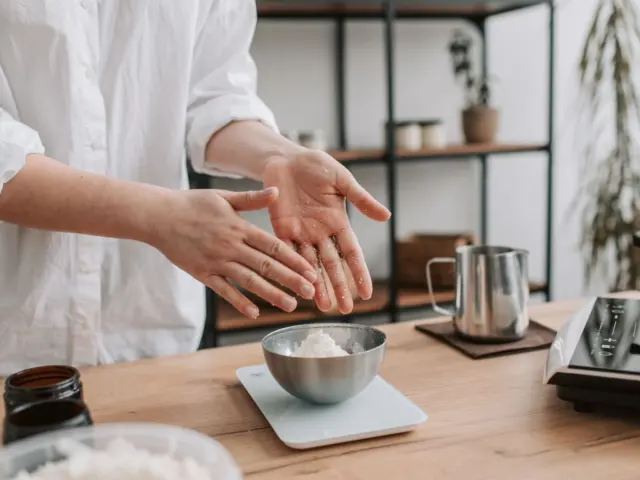
Brands also differ. Bob’s Red Mill, for instance, states that its organic unbleached all-purpose flour weighs 136 grams per cup, and it adds that all of its flours have slightly different weights per cup because of their density and particle size. A recipe written in grams avoids the whole question.
If a recipe only gives cups, follow the spoon-and-level approach explained in our guide on how to measure flour. Better still, buy a digital scale. It is inexpensive and it also saves washing up, because you can weigh everything into one bowl.
A simple measuring routine
- Place the bowl on the scale and set it to zero.
- Add each ingredient in turn, zeroing between additions.
- Weigh liquids and eggs too when a recipe gives weights.
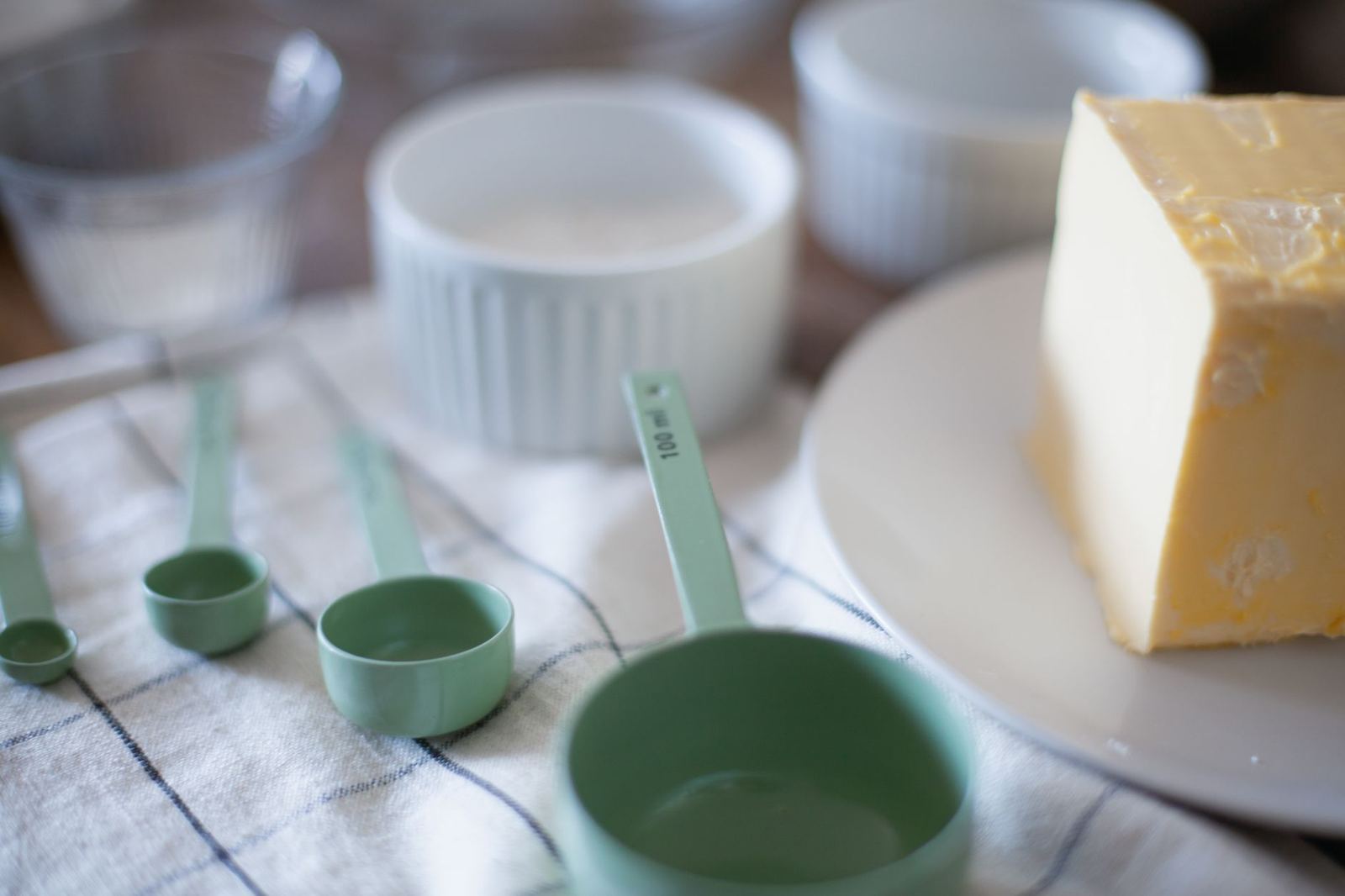
- Measure tiny amounts, such as leavener and salt, with proper measuring spoons and level them off.
Prepare everything before you begin. Bakers call this mise en place, and it prevents the panicked moment when you find the butter is still cold or the eggs are still in the fridge.
Flour and leavening: choosing what makes dessert tender
Protein is what builds gluten, and gluten gives structure. Too much makes a cake tough, while too little can leave it fragile.
King Arthur gives clear numbers for its own flours. It says cake flour has a protein percentage of 10%, which it calls low-protein, while its all-purpose flour sits at 11.7%. It also notes that those percentages are what the company guarantees for its own products, and other brands may vary.
That matters for delicate desserts. Many Japanese-style sponges and chiffon cakes are meant to be soft and fine, so a lower-protein flour is a sensible choice when you can find it. When you cannot, our guide to a cake flour substitute explains how to get close with what is in your cupboard.
Know your leaveners
Baking powder and baking soda are not interchangeable. Soda needs an acid in the batter to work, while powder carries its own acid and works on its own.
Swapping one for the other without adjusting the recipe often gives a soapy taste, poor browning or a flat result. Read baking powder vs baking soda for the full comparison before you substitute.
Also check freshness. Old leavener loses strength quietly, and the fault then looks like a technique problem when it is really a pantry problem.
Fat, sugar and ingredient temperature
Butter, oil, sugar and salt do more than add flavour. They shape the crumb, hold moisture and decide how a cake browns, so each deserves a moment of thought before you start mixing.
Butter gives flavour and a tender, slightly dense crumb. Oil keeps cakes moist for longer and is common in light chiffon-style batters. Neither is a straight swap for the other, because butter contains water and milk solids while oil does not.
Sugar sweetens, but it also tenderises, helps foams stay stable and encourages colour. Cutting it sharply can leave a cake pale, dry and short-lived, so reduce it only in small steps and expect a different result.
Why room temperature is such common advice
Recipes often ask for ingredients at room temperature because they blend more evenly. Soft butter traps air when creamed with sugar, and eggs that are not chilled mix smoothly into the batter without making it curdle.
Cold ingredients are not always wrong, though. Pastry doughs often depend on cold butter, and some foams whip more easily when whites are only slightly cool. Follow the recipe’s wording, and when it is silent, soft butter and mild eggs are a safe default for cakes.
- Cut butter into small pieces so it softens quickly and evenly.
- Stand eggs in a bowl of warm tap water for a few minutes if you forgot to take them out.
- Warm milk gently, never to the point where it could cook the eggs.
- Sift dry ingredients together so leavener and salt are spread evenly.
Mixing without overworking
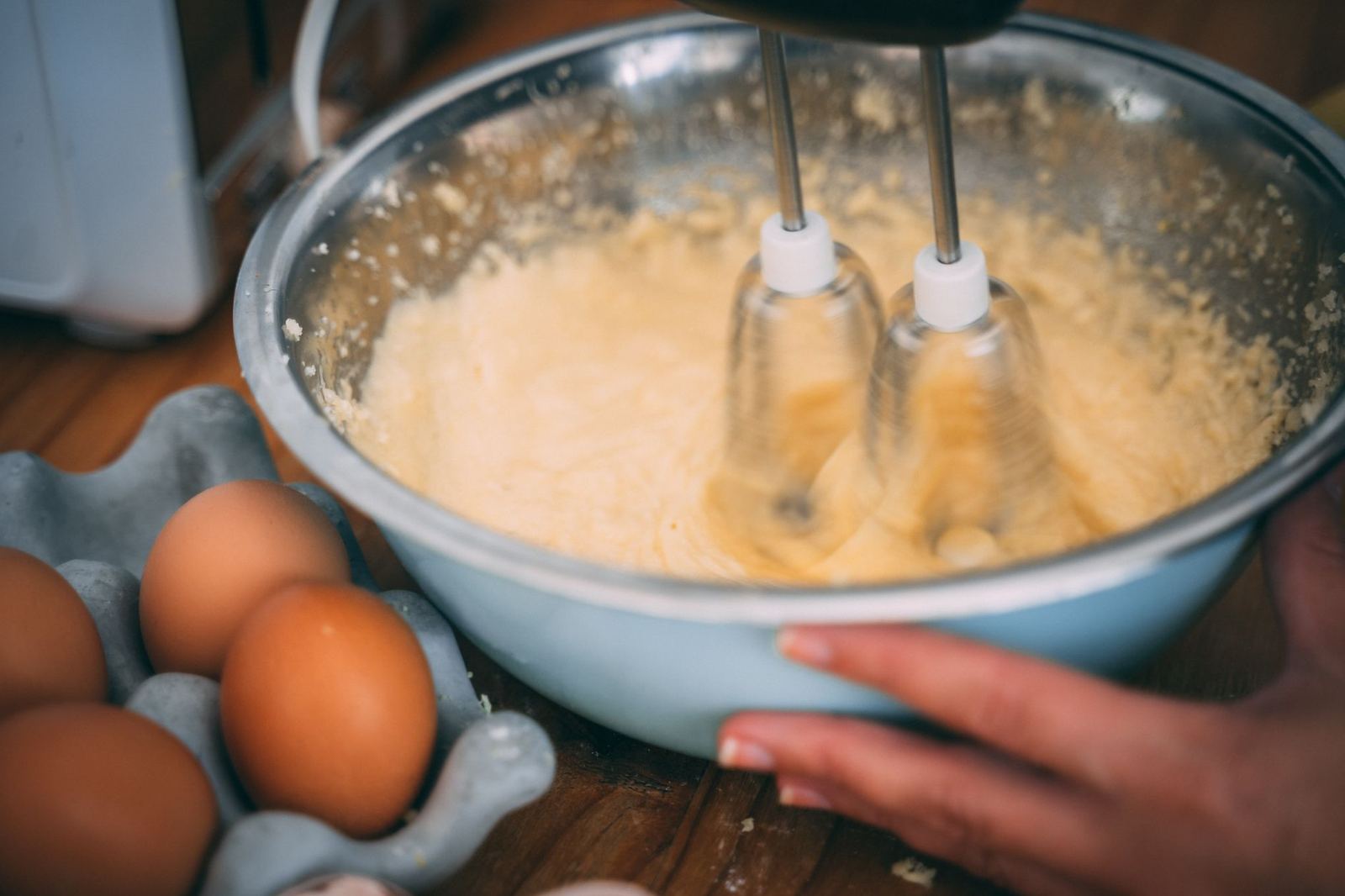
Different cakes call for different mixing styles. Creaming butter and sugar builds air for classic butter cakes, while the foam method relies on whipped eggs, and the all-in-one method simply combines everything quickly.
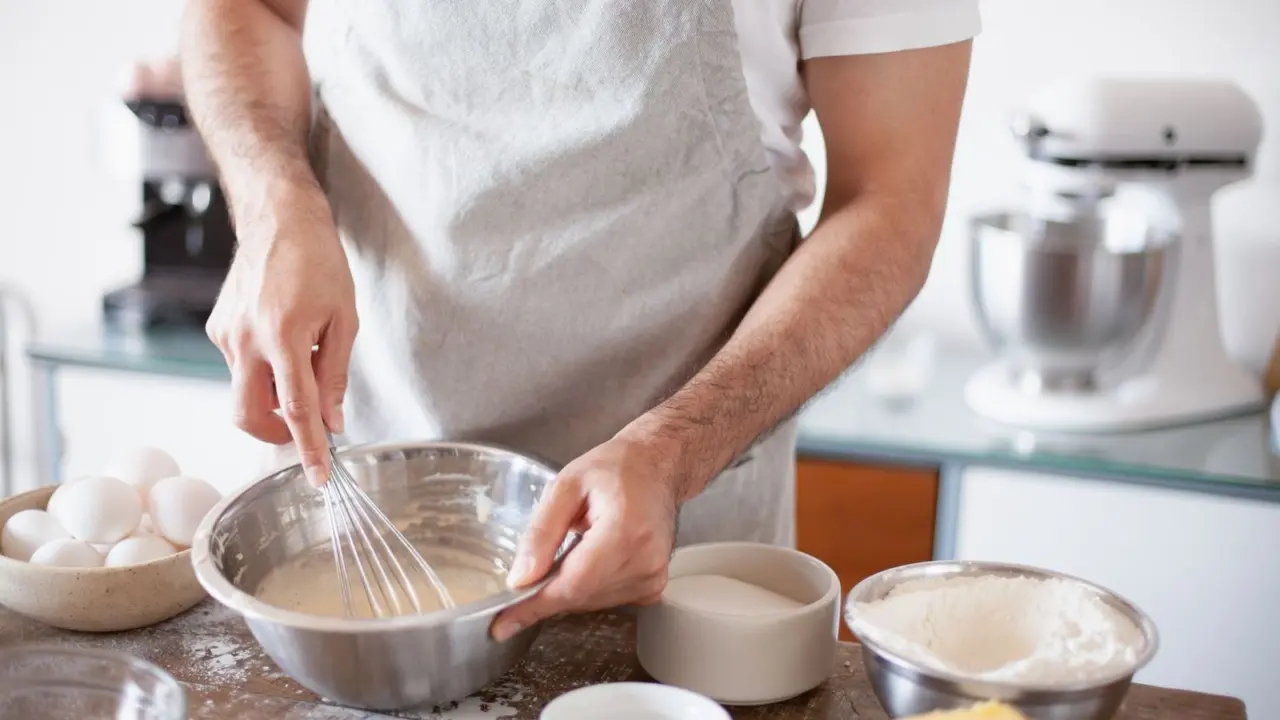
Whichever method you use, the flour stage is where care matters most. Once liquid meets flour, gluten starts to form, and every extra stir makes the crumb chewier. Mix until the batter just comes together, then stop.
Eggs, foams and gentle folding
Many delicate desserts rely on eggs for lift. Whole eggs, yolks and whites each behave differently, and the way you whip them sets the texture of the finished cake.
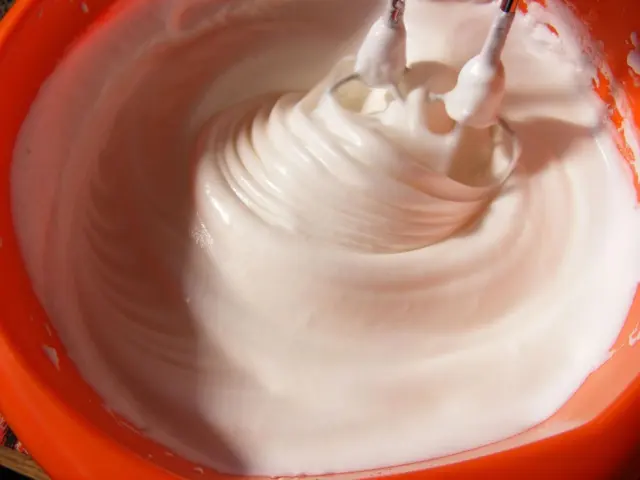
Whites need a clean, grease-free bowl and a patient hand. Learn how to whip egg whites to stiff peaks and you will understand most meringues, soufflé-style cakes and chiffon batters.
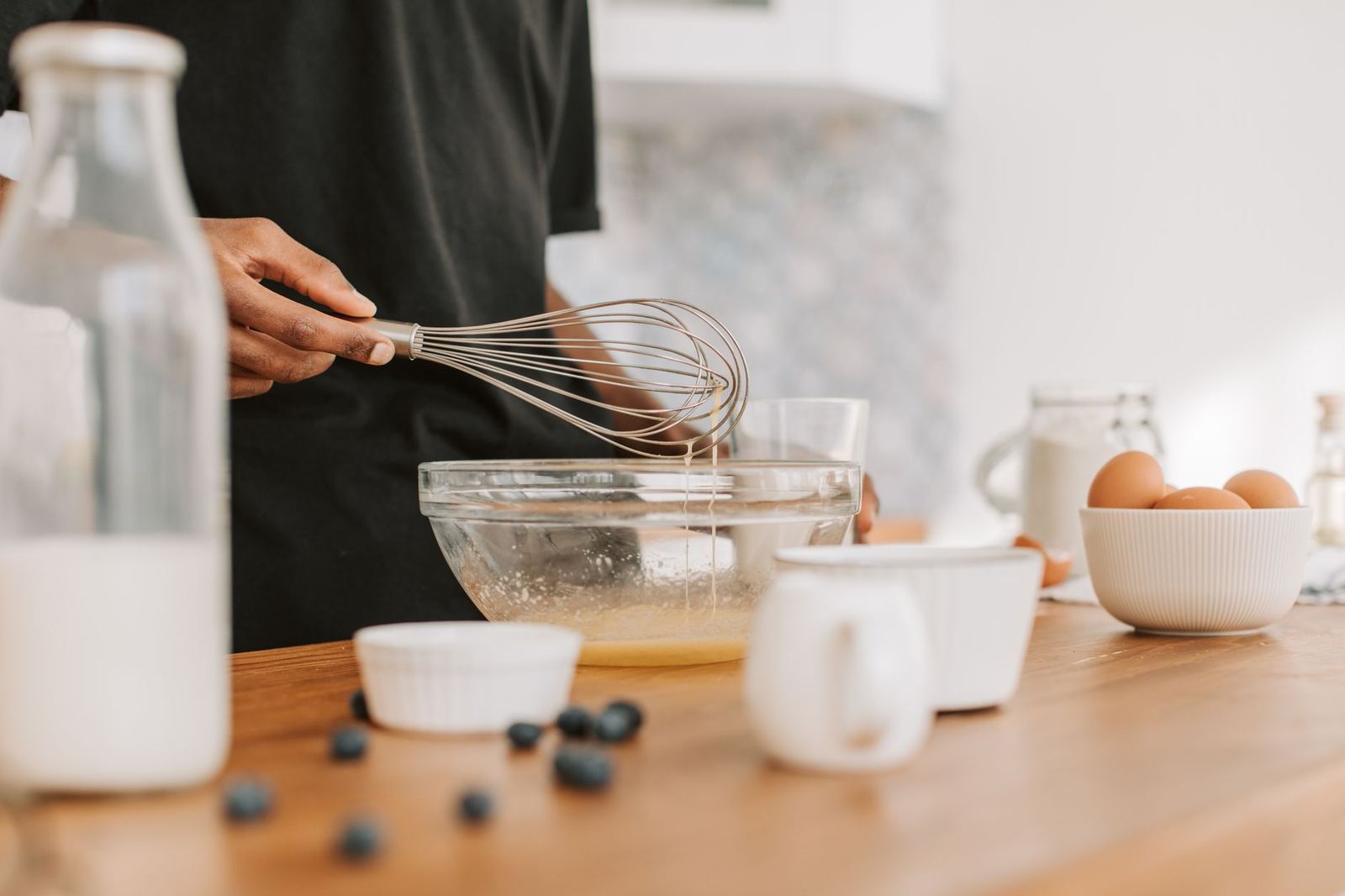
Once air is in the batter, the next job is keeping it there. Stirring knocks it out, so the technique called folding exists to combine mixtures with as little loss as possible. The details are covered in how to fold batter.
Habits that protect a foam
- Use a bowl that is clean and completely dry.
- Separate eggs carefully, because a trace of yolk weakens whites.
- Start the fold with a spoonful of foam to loosen the heavier mixture.
- Stop mixing as soon as no streaks remain.
- Get the batter into the oven promptly, before it deflates.
Egg safety in baked dishes
Eggs are also a food safety matter. The egg safety organisation eggsafety.org advises that for foods like quiches, baked goods and casseroles, you should use a thermometer in the center and around the sides of the dish, and that the thermometer should reach 160°F.
The same page says that for custards, eggnog and ice cream bases, you should cook the mixture until it reaches 160°F or higher. For meringue, it advises baking until the meringue reaches 160°F. Treat these as general guidance from that source, and follow your local food safety authority if you serve pregnant guests, older adults or young children.
Pans, heat and the oven you actually have
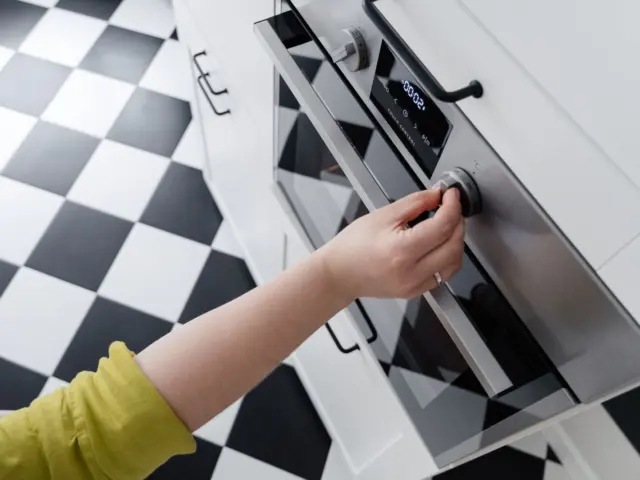
Your oven is probably not as accurate as its dial suggests. ThermoWorks explains that ovens run on thermostats that turn heat on and off at points above and below your set temperature, so the real temperature swings around the number you chose.
The same article notes that oven thermostats can easily be off. An inexpensive oven thermometer on the middle rack tells you what is really happening.
Oven habits for even baking
- Preheat fully and give the oven extra time to settle.
- Keep the door closed as much as possible, especially for sponges.
- Bake on the middle rack unless the recipe says otherwise.
- Rotate the pan only late in baking, when the structure has set.
- Note whether your oven runs hot or cool and adjust the dial accordingly.
Recipes from other countries often use Celsius, Fahrenheit or fan settings. Our reference on oven temperature conversion helps you translate them, though your thermometer remains the final judge.
Preparing the pan
A well-prepared pan protects the delicate edges of a sponge. Paper lining, light greasing or a bare ungreased tin are all correct in different recipes, and chiffon cakes in particular often need an ungreased tin so the batter can climb the sides.
When a recipe calls for paper, see how to line a cake pan for neat results that release cleanly.
Gentle heat: custards, cheesecakes and the water bath
Egg-rich desserts such as baked custards, pudding and soft cheesecakes set at low temperatures. If the heat is too aggressive, the proteins tighten, the surface cracks and the texture turns grainy.
A water bath surrounds the dish with moderated heat and moist air, so the edges cook at nearly the same pace as the centre. The method is explained step by step in how to bake in a water bath.
For these desserts, doneness is not a firm set. The centre should still tremble slightly when you nudge the pan, because it finishes setting as it cools. Use the temperature guidance in the egg safety section when you need a firm number to aim for.
Cooling matters too
Many bakers lose a good cake in the last step. A hot sponge is fragile, and a custard keeps cooking from its own heat.
- Cool sponges in the pan briefly, then release and cool on a rack so steam can escape.
- Let custards and cheesecakes cool gradually rather than shocking them in the fridge.
- Chill them fully before slicing, using a clean knife wiped between cuts.
Reading doneness beyond the timer
A recipe’s baking time is a guide, not a promise. Your oven, your pan material and even the humidity in your kitchen can all shift the finish by several minutes.
Learn the physical signs instead. A sponge should be golden, pull slightly away from the edges and spring back when you press the centre lightly. A skewer inserted in a butter cake should come out clean or with a few dry crumbs.
Custards and cheesecakes need a different check, since they are judged by wobble rather than spring. Chiffon cakes are often judged by springiness and by how the top feels when touched lightly, and they are usually cooled upside down in the pan, as the recipe directs, to stop them shrinking.
Signs that a bake needs adjusting
- The top browns far ahead of the centre: lower the heat or tent the pan loosely with foil.
- The edges set but the middle stays liquid: the oven may be too hot, so check it with a thermometer.
- The cake domes sharply and splits: the oven is likely too hot at the start.
- The crumb looks gummy near the base: bake a little longer or use a lighter-coloured pan.
Dark pans absorb more heat and brown edges faster than shiny ones, and glass holds heat for a long time. If you change pan material, watch the bake earlier than the recipe suggests.
Building skills in a sensible order
You do not need to master everything at once. A gentle sequence helps you learn one new idea per bake and see exactly what changed.
- Start with a simple butter or oil cake to practise weighing, mixing and oven awareness.
- Move to a foam-based sponge to practise whipping and folding.
- Try a baked custard or soft cheesecake to practise gentle heat and the water bath.
- Finish with something layered or filled, where several skills meet.
Keep short notes after each bake: what you changed, how the crumb looked, and what you would alter next time. Those notes teach you more than any single recipe.
Once your fundamentals feel steady, you may enjoy pairing your bakes with a pot of tea. Our overview of japanese tea and sweets explores how the two traditionally complement each other.
Common problems and likely causes
- Dense, tough cake: too much flour, overmixing or a higher-protein flour.
- Sunken centre: underbaking, an opened oven door or a deflated foam.
- Cracked custard top: heat too strong or no water bath.
- Weeping meringue: underwhipped whites or undissolved sugar.
- Pale, flat bake: old leavener or an oven running cool.
Work through these one at a time. Change a single variable per bake, whether that is the flour weight, the mixing time or the oven setting, and you will quickly learn which habit was responsible. Bakers who change several things at once often fix the problem without ever understanding why, and the same fault returns the next time they make the recipe.
Patience matters as much as precision. Delicate desserts forgive a slightly uneven slice or a pale edge far more readily than they forgive rushed whipping, impatient folding or an oven opened too soon. Slow down at those moments and the rest tends to fall into place, bake after bake, with very little extra effort required.
Frequently asked questions
Do I really need a kitchen scale?
Show answer
It is the single most useful upgrade. Volume measures vary with how you fill the cup, while grams stay the same, and brands even differ in how much a cup of flour weighs.
Can I use all-purpose flour for a delicate sponge?
Show answer
Yes, with realistic expectations. King Arthur lists all-purpose flour at a higher protein percentage than cake flour, so the crumb is a little sturdier. Gentle folding and not overmixing help keep it tender.
Why does my cake sink after baking?
Show answer
Common causes are an underbaked centre, an oven door opened too early, a collapsed foam or inaccurate oven heat. An oven thermometer and a firmer doneness check usually solve it.
How do I know a custard is safe and done?
Show answer
Use a food thermometer. The eggsafety.org page advises that egg-containing dishes should reach 160°F, and that custards should be cooked to that temperature or higher. Follow your local food safety guidance for vulnerable guests.
Is this site connected to any brand mentioned here?
Show answer
No. This is an independent educational site, and the brands and organisations named are cited only as sources of published information.