Standing at the pantry with a recipe open, wondering about baking powder vs baking soda? Soda is pure sodium bicarbonate and needs an acid; baking powder carries its own acid, so it works alone.
This short guide is part of our baking basics series.
| Item | Key fact |
|---|---|
| Baking soda contains | Only sodium bicarbonate |
| Baking powder contains | Sodium bicarbonate plus two acids |
| Relative strength | Baking soda is about 3-4 times as strong |
| Swapping powder for soda | Use 3 tsp baking powder for 1 tsp baking soda |
| Homemade baking powder (1 tsp) | ¼ tsp baking soda + ½ tsp cream of tartar |
Figures come from Arm & Hammer’s guide and NC State News. They can change, so check the sources before you rely on them.
What each leavener actually is
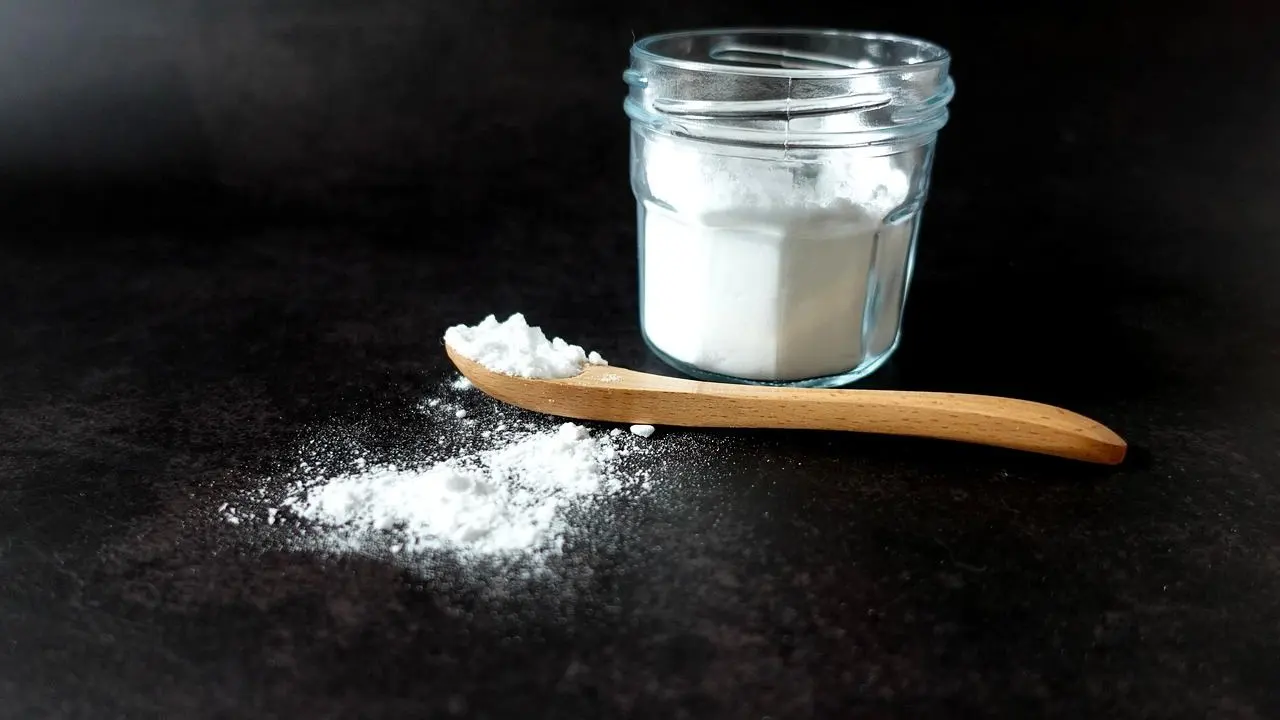
Baking soda has a single ingredient: sodium bicarbonate. It is a base, which means it only produces lift when it meets an acid in your batter.
Baking powder is a packaged kit. It holds the same sodium bicarbonate, plus dry acids and usually a little starch to keep the mix from clumping. Add liquid and the acids and base react without any help from the rest of your recipe.
That is the whole difference. One needs a partner; the other brings its own.
How the chemistry makes cakes rise
When a base meets an acid in moisture, the reaction releases carbon dioxide bubbles. Those bubbles get trapped in the batter, and heat sets the structure around them so the crumb stays light.
Baking soda reacts almost at once, so batter made with it should go into the oven fairly quickly. Baking powder is usually “double acting”, meaning it releases gas in stages: some when it gets wet, and more once it heats up in the oven.
That second burst is why powder suits tender cakes and pancakes that sit for a few minutes before baking.
Which acids wake up baking soda?
If a recipe calls for baking soda, it nearly always contains an acidic ingredient to balance it. Common ones include:
- Buttermilk, yogurt or sour cream
- Honey or molasses
- Brown sugar
- Natural cocoa or chocolate
- Vinegar or lemon juice
Without enough acid, soda is left unreacted. Baked goods can then taste soapy or metallic and turn out dense or oddly dark.
Why recipes sometimes use both
Plenty of recipes list baking soda and baking powder together. The soda neutralises extra acid, such as buttermilk, which also improves browning and flavour. The powder supplies the main rise.
So the pairing is deliberate, not a mistake. Changing either amount shifts the texture, so follow the written quantities.
Precision matters just as much with flour. If your cakes still turn out heavy, read our guide on how to measure flour, because too much flour is a common cause.
Swapping one for the other
You can substitute in a pinch, but the amounts differ. Baking soda is the stronger of the two, about 3-4 times as strong as baking powder.
- Powder instead of soda: use 3 tsp baking powder for each 1 tsp baking soda. No extra acid is needed.
- Soda instead of powder: use ¼ tsp baking soda plus ½ tsp cream of tartar for each 1 tsp baking powder.
- Lemon option: ¼ tsp baking soda plus 1 tsp lemon juice or vinegar can replace 1 tsp baking powder, though it may slightly alter taste.
Homemade powder is not double acting, so get the batter into the oven soon after mixing. Swaps work best in simple recipes; fussy sponge cakes are less forgiving.
Flour matters too. If you are also short of the right flour, our page on a cake flour substitute explains how to adjust.
Choosing the right one for soft, delicate bakes
Light, tender textures are the goal in many Japanese-style desserts, such as fluffy steamed buns, soft pancakes and gentle sponge-style cakes.
Batters built on milk, plain flour and sugar are close to neutral. Soda alone would stay mostly unreacted there, so a powder that carries its own acid gives a more predictable rise.
Recipes with a clearly acidic ingredient, like cocoa, brown sugar or yogurt, are the ones where soda earns its place. It also deepens browning and adds a slightly chewier bite to cookies.
How to tell which one a recipe needs
You can often guess before you read the method. Look at what is in the bowl and ask what the acid would be.
- No acidic ingredient in the list: expect baking powder.
- Clearly acidic ingredient and a small amount of leavener: expect baking soda, or both.
- Large amount of acid in the recipe, such as plenty of buttermilk: both are common, with the soda neutralising and the powder lifting.
When a recipe has been tested and written with a particular leavener, trust it over general rules. A swap is a fallback for the day the cupboard is bare, not an upgrade.
Storing and testing your leaveners
Both leaveners lose strength with time and humidity, so keep them in a sealed container in a cool, dry cupboard. Never dip a damp spoon into the tin, because moisture can trigger the reaction before the ingredient ever reaches your batter.
To check baking powder, stir a little into hot water; lively fizzing means it is still working. To check baking soda, add it to a splash of vinegar and look for the same vigorous bubbling.
If either one barely reacts, replace it. A fresh tin costs very little compared with a flat, wasted cake.
Common mistakes to avoid
- Using too much: the batter rises fast, then collapses, and leaves a bitter taste.
- Letting batter wait with soda: the gas escapes before baking.
- Assuming they are interchangeable: a straight swap of equal spoonfuls gives flat or off-tasting results.
- Using old powder: weak leaveners give weak lift, so test a pinch in hot water; fizzing means it is still active.
Measure with proper level spoons and sift the leavener with the dry ingredients so it spreads evenly.
Clumps of leavener are a quiet cause of failure. A pocket of unmixed soda leaves a bitter, metallic spot in the crumb, and an uneven distribution makes one side of a cake rise higher than the other.
Mix wet and dry ingredients gently once they meet. Overworking the batter knocks out the bubbles you have just made, however well the leavener is chosen.
Finally, keep your oven preheated before you start mixing, since the gas is released on a clock. A cold oven wastes the early lift, and the cake can settle before the heat sets it.
Frequently asked questions
Can I use baking soda instead of baking powder?
Show answer
Yes, if you add an acid. Use ¼ tsp baking soda plus ½ tsp cream of tartar for each 1 tsp baking powder, according to Arm & Hammer’s conversion.
Can I use baking powder instead of baking soda?
Show answer
Yes. Use three times as much baking powder as the baking soda called for. The result may be slightly milder in rise and flavour.
Is baking powder just baking soda with something added?
Show answer
Essentially. NC State News says all baking powders contain sodium bicarbonate, just like baking soda, and also contain two acids.
Why did my baking taste soapy?
Show answer
Usually too much baking soda, or not enough acid to use it up. Measure level spoonfuls and check that the recipe has an acidic ingredient.