Worried your meringue will collapse? To learn how to whip egg whites to stiff peaks, start with a spotless bowl, cold-to-cool whites, and a steady mixer, then stop the moment the peak stands upright.
This guide is part of our baking basics series, written for home bakers making Japanese-style sponges, soufflé pancakes and meringues.
| Item | Key fact |
|---|---|
| Safe temperature for egg-white dishes | 160°F |
| Italian meringue whites reach | Not much above 125°F |
| Bowl that lowers overbeating risk | Copper |
| Budget stabiliser | Cream of tartar |
| Uncooked recipes | Pasteurized egg whites |
Figures come from South Dakota State University Extension and Popular Science. They can change, so check the sources before you rely on them.
What happens when you whip egg whites
Egg whites are mostly water and protein. Beating pulls air into them and unfolds (denatures) the proteins, which then bond to each other and wrap around the air bubbles.
Popular Science describes it this way: “As you denature the proteins, though, the amino acids that make them up start to form new bonds with each other.” Those bonds are the net that holds your foam up.
The same net is easy to wreck. Whip too little and it cannot hold; whip too long and it tightens, squeezes out water and turns grainy.
Set up your bowl and eggs first
A trace of fat, from yolk, a greasy bowl or a plastic whisk, stops the proteins from building a stable foam.
Use this quick checklist:
- Wash the bowl and beaters with hot soapy water, rinse well and dry them completely.
- Choose a metal or glass bowl. Plastic can hold on to traces of oil.
- Separate each egg over a small cup, then tip the clean white into the main bowl. One broken yolk then only spoils one white.
- If a speck of yolk gets in, lift it out with a piece of eggshell or discard that white.
- Whip whites that are cool but not icy. Cold whites take longer to start foaming; room-temperature whites usually whip with more volume.
A wide bowl with a rounded bottom lets the whisk reach every bit of white. A tall, narrow bowl leaves pockets of unwhipped liquid.
Soft, medium and stiff peaks: what to look for
Lift the whisk straight out of the bowl and look at the tip of the foam. The way the tip behaves tells you which stage you are at.
- Foamy: big, loose bubbles, like the top of a bubble bath. The whites are still very runny underneath.
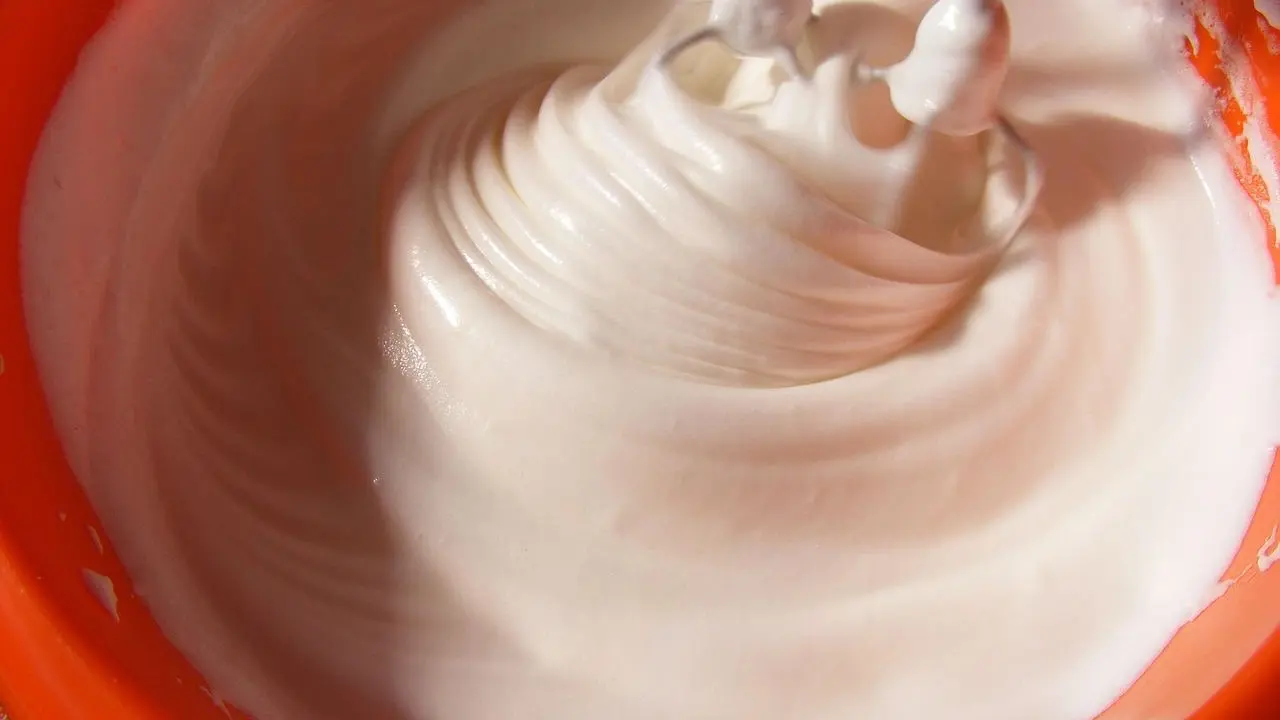
- Soft peaks: the foam is white and glossy. The tip forms a peak but slumps over at once. This is the stage for adding sugar.
- Medium peaks: the tip holds its shape but curls over like a soft-serve swirl. Many chiffon and sponge batters want this stage.
- Stiff peaks: the tip stands straight up, the foam is thick and shiny, and the bowl can be tilted without it sliding. Stop here for most meringues.
- Overbeaten: the foam looks dull, lumpy and dry, and watery liquid collects at the bottom.
Stiff does not mean “as long as possible”. Stop as soon as the peak stands tall and glossy, because dry foam is hard to fold into a batter and bakes up coarse.
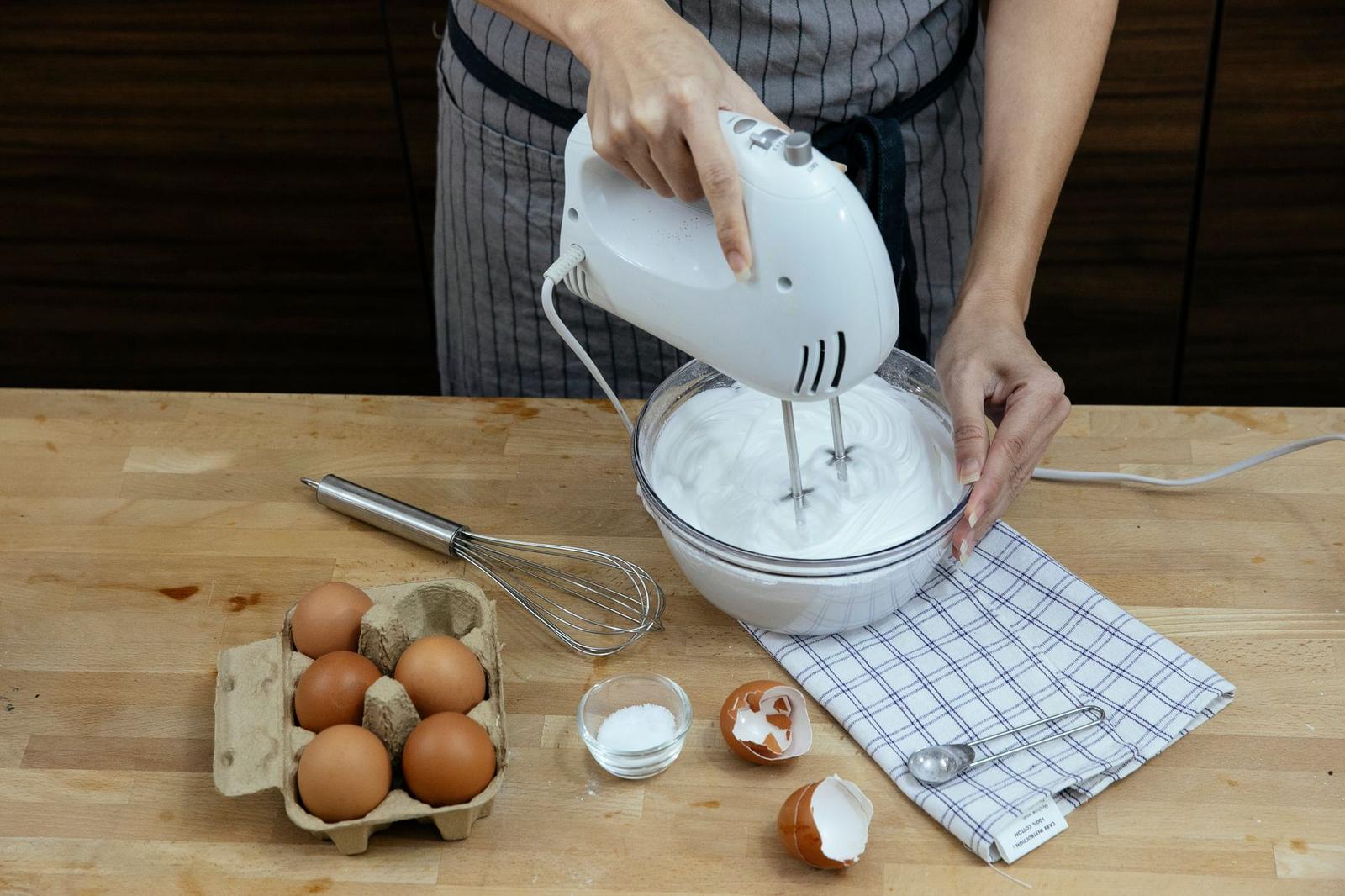
A step-by-step method that works
This method suits a stand mixer, a hand mixer or a balloon whisk, though a whisk takes far more effort. Timing varies with the machine, the bowl and the number of whites, so judge by the foam, not the clock.
- Start on low speed until the whites turn foamy and cloudy.
- Add your acid (see below) once foam appears, then raise the speed to medium.
- When the whites reach soft peaks, begin adding sugar a spoonful at a time, with the mixer running.
- Keep adding sugar slowly. Fine sugar dissolves faster and gives a smoother, glossier meringue.
- Turn the speed up and whip until the peak you want is reached, checking often.
- Use the foam straight away. It starts to weep if it waits.
Rub a little meringue between your fingers. If it feels gritty, the sugar has not dissolved yet and you should whip a bit longer.
Copper bowls, cream of tartar and other helpers
Whipping by hand is slow and easy to overdo. Popular Science notes that “It takes quite a long time, especially if you’re doing it by hand, and it’s easy to overbeat them.”
The magazine says a copper bowl removes those annoyances. Its advice for everyone else is practical: “If you can’t afford a copper bowl, try adding a bit of cream of tartar to your egg white mix.”
Cream of tartar is an acid. It helps the foam become steadier and harder to overwhip. A few drops of lemon juice or white vinegar can do a similar job, though the flavour may show in very plain meringues.
One catch comes from the South Dakota State University Extension: “If you use an unlined aluminum saucepan, eliminate the cream of tartar or the two will react and create an unattractive gray meringue.” This matters if you cook your whites over heat.
Sugar is a stabiliser too. It makes the foam glossier and tougher, which is why it goes in at the soft peak stage rather than at the start.
Fixing common problems
- Whites will not whip: there is almost always fat somewhere. Start again with a freshly washed bowl and new whites.
- Foam looks grainy or dry: you went past stiff. Add one fresh white and whip briefly to rescue it, though the result is never quite as good.
- Meringue weeps or beads: the sugar was not fully dissolved, or the foam sat too long before baking.
- Batter deflates when folded: the foam was overbeaten, or you stirred instead of folding. Use a wide spatula and cut down the middle, then sweep up the side.
Soft whipped whites are the secret of many fluffy Japanese cakes. If your sponge recipe also needs light flour, our guide to a cake flour substitute covers that side. For gentle, even heat on delicate bakes, read how to bake in a water bath.
Food safety with raw egg whites
Many meringues and mousses use whites that never get fully cooked. South Dakota State University Extension advises: “If you are making a recipe that will not be cooked, use pasteurized dried or pasteurized refrigerated liquid egg whites.”
For a cooked meringue, the same source says to cook “over low heat or simmering water, beating constantly with a portable mixer at low speed, until the whites reach 160° F.” That is the temperature to aim for with a food thermometer.
The extension also warns about Italian meringue: whites made this way “do not reach much above 125° F, so this method is not recommended, except for dishes that are further cooked.” If you serve young children, older adults, pregnant guests or anyone with a weak immune system, pasteurized whites are the safer route.
Expect to adjust timing and check the foam by eye.
Frequently asked questions
How long does it take to whip egg whites to stiff peaks?
Show answer
It depends on your mixer, bowl and the number of whites. A stand mixer is fastest and a hand whisk slowest, so go by the look of the peak rather than a set time.
Can I whip egg whites without cream of tartar?
Show answer
Yes. Cream of tartar makes the foam steadier, but a clean bowl and careful timing are enough. A few drops of lemon juice or white vinegar can replace it.
Why won’t my egg whites form peaks?
Show answer
Fat is the usual cause: a speck of yolk, an oily bowl or a plastic tool. Start over with clean equipment and fresh whites.
Can I fix overwhipped egg whites?
Show answer
Sometimes. Add one fresh egg white and whip it in briefly. The foam will usually loosen, though it will not be as strong as a perfect batch.
Is it safe to use raw egg whites?
Show answer
Not for everyone. For uncooked recipes, South Dakota State University Extension recommends pasteurized egg whites, and cooked meringues should reach 160°F.