Wondering how to measure flour so your cakes stop coming out dense? Weigh it on a scale. If you only have cups, fluff, spoon and level instead of scooping.
This guide is part of our baking basics series, written for home bakers making Japanese-style desserts.
| Item | Value |
|---|---|
| All-purpose flour, fluff, scoop and level (King Arthur) | around 120 grams per cup |
| All-purpose flour, scale, King Arthur test kitchen | 120 grams per cup |
| Spooned and leveled cup (Love and Lemons) | 120 to 125 grams |
| Scooped and packed cup (Love and Lemons) | up to 155 grams |
| Condensed flour in a cup (King Arthur) | up to 160 grams |
Figures come from King Arthur Baking and Love and Lemons. They can change, so check the sources before you rely on them.
Why flour is so easy to measure wrongly
Flour is a fine powder that settles and compacts as it sits in a bag or canister. A cup dipped into packed flour holds far more than a cup filled gently.
King Arthur explains that if the flour is more condensed, a cup can hold up to 160 grams of all-purpose flour, while a fluffed, scooped and leveled cup holds around 120 grams. That gap is large enough to change the texture of a cake.
Love and Lemons makes the same point from the other side: when you measure by volume, the amount depends on your cups, how you scoop and how tightly you pack the flour.
Light, delicate Japanese desserts are especially sensitive. A fluffy sponge, a chiffon cake or a soft shortcake relies on a precise balance of flour, eggs and sugar. Too much flour gives a tight, dry crumb.
Measuring flour by weight
A kitchen scale is the most dependable tool. King Arthur says that with a scale you will always get exactly 120 grams of all-purpose flour per cup, as whoever developed the recipe intends. It also notes that it recommends always using a scale.
Love and Lemons agrees that weight measurements are always the most accurate for baking.
Steps for weighing
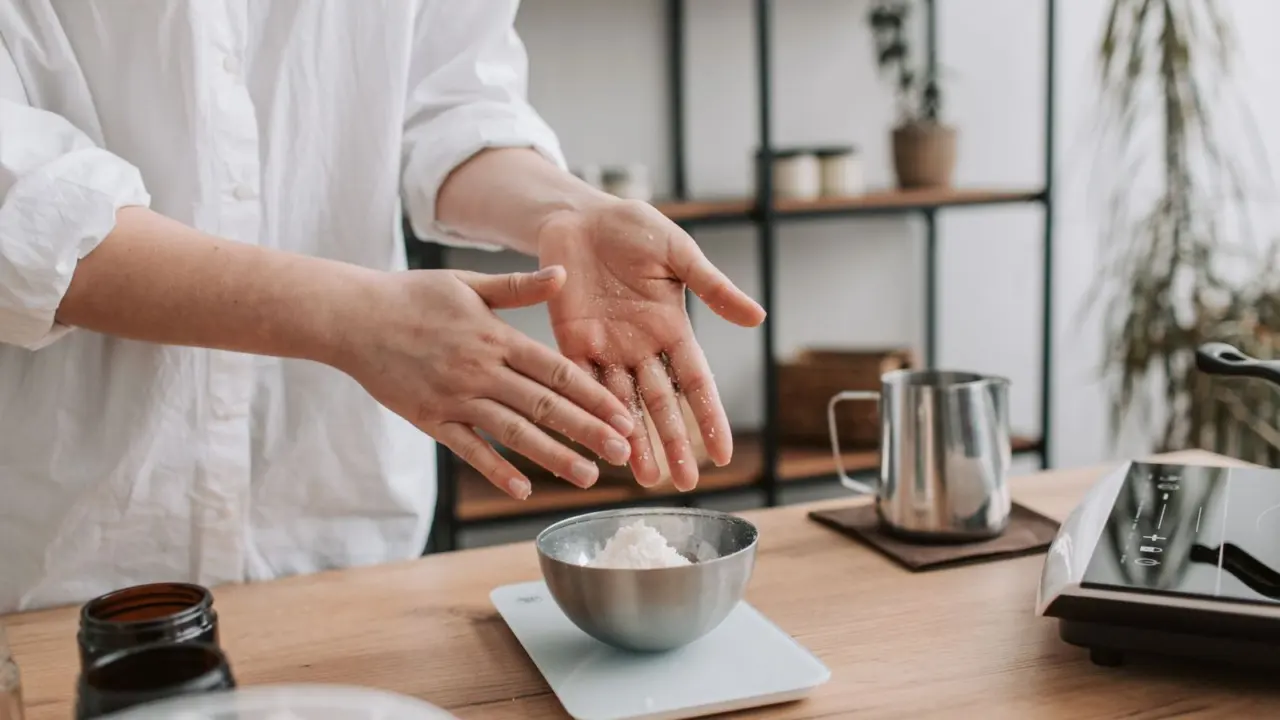
- Place your bowl on the scale.
- Press the “Tare” button so the display reads zero grams.
- Add flour with a spoon until you reach the weight in the recipe.
- Tare again before adding the next ingredient, following the recipe’s mixing instructions.
Taring resets the scale to zero. Follow the recipe’s instructions for mixing ingredients separately.
If a recipe gives only cups, King Arthur’s figure of 120 grams per cup of all-purpose flour is a reasonable starting point. Weigh out that amount for each cup and keep notes, so you can adjust if the result is too dry or too tight.
Scales also let you scale a recipe up or down cleanly. Halving or doubling a weight is simple arithmetic, while halving a cup of flour by eye invites exactly the error you are trying to avoid.
How to measure flour in cups: the spoon-and-level method
No scale? You can still get good results. Love and Lemons says you can get good results with the spoon-and-level method, even though weight is always the most accurate.
- Fluff the flour in its container with a spoon or fork to loosen any packed flour.
- Spoon the flour gently into a dry measuring cup, letting it mound over the top.
- Sweep the flat edge of a knife across the rim to level it.
- Do not tap, shake or press the cup, because that packs the flour down.
Love and Lemons gives a clear warning: whatever you do, don’t scoop the flour directly from the canister. Scooping presses flour into the cup and brings you close to the heavier figures in the table above.
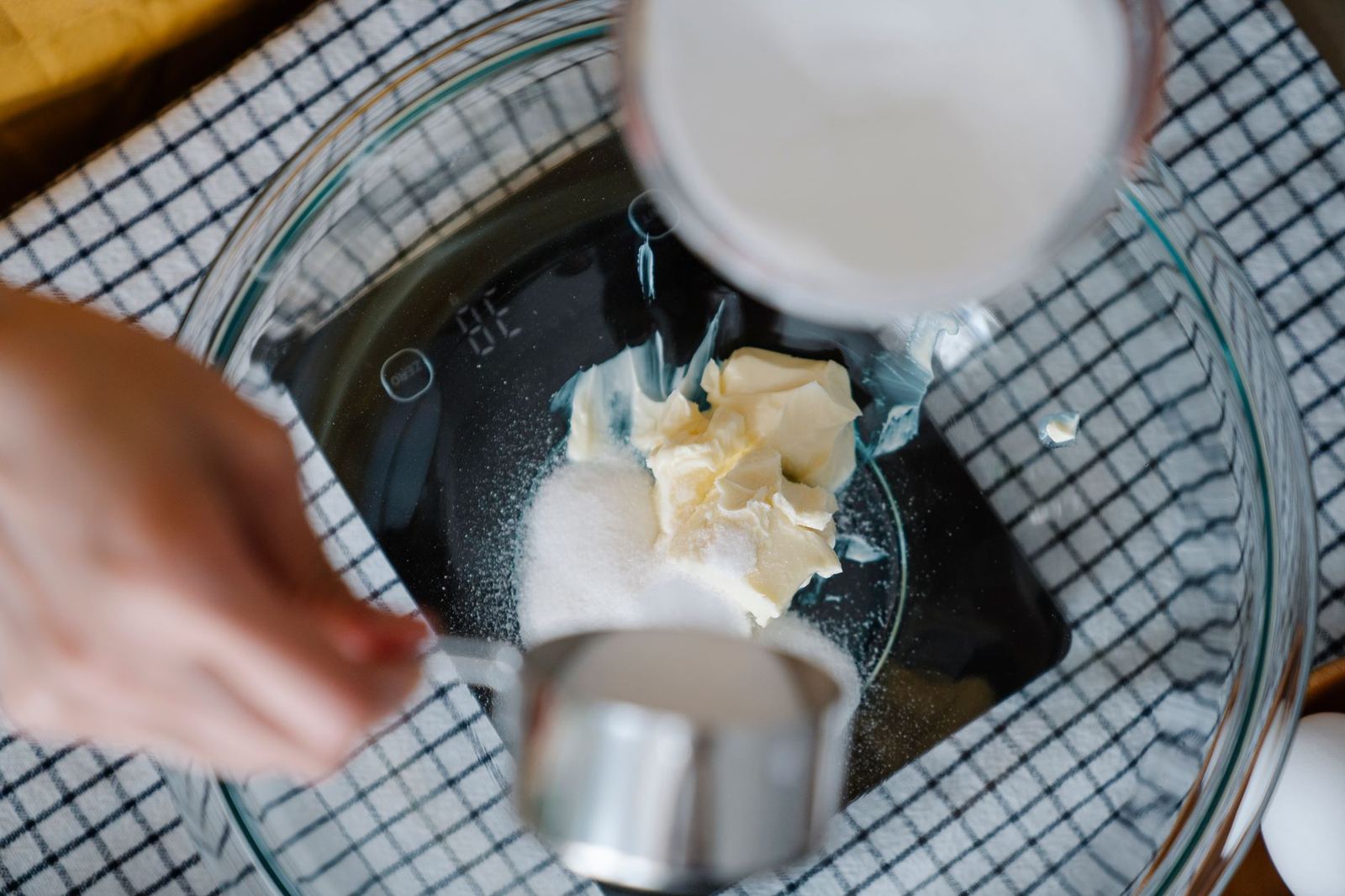
A good habit is to measure over a separate bowl or the flour container, never directly over your mixing bowl. If you overfill or spill, you can tip the excess back without upsetting the rest of the batter.
Work slowly with the spoon. Dropping flour from a small height lets it fall loosely into the cup, while pressing the spoon into the cup compacts it. The goal is a cup that is full of air, not a cup that is full of flour.
What a cup of flour should weigh
For reference, Love and Lemons says one cup of spooned and leveled all-purpose flour should weigh between 120 and 125 grams. A scooped and packed cup can weigh up to 155 grams.
Use these as a sanity check. If you weigh a cup you measured and it comes out far above the range, your technique is packing the flour.
The numbers you see depend on who wrote the recipe. King Arthur works from 120 grams per cup, so a recipe from another source may assume a slightly different figure. When a recipe gives both cups and grams, trust the grams.
Check your own technique
- Weigh one spooned and leveled cup of your usual flour.
- Weigh one cup scooped straight from the bag.
- Compare both results to the ranges above, then keep the method that lands closest to the recipe’s weight.
This takes a minute and shows you how much your habits matter.
Other tips for accurate baking
Different flours behave differently, and a cup of one type will not necessarily weigh the same as a cup of another. When a recipe names a specific flour, use that flour and its listed weight rather than swapping cup for cup.
Keep your tools consistent too. Use dry measuring cups, which can be filled to the rim and leveled, rather than a liquid jug with a spout. A jug makes it almost impossible to level the flour properly.
Store flour in a sealed container and fluff it before every measure. Flour that has been sitting settles again, so the first cup out of a freshly filled canister is not the same as the cup after the container has been moved or shaken.
Flour is only one variable. Rising agents also need care, and our guide to baking powder vs baking soda explains why you should not use them interchangeably.
Oven accuracy matters as much as measuring. If your recipe uses a different temperature scale, our guide to oven temperature conversion shows how to translate it.
Sifting is a separate step from measuring. Follow the recipe’s order: if it says “1 cup flour, sifted”, measure first and then sift. If it says “1 cup sifted flour”, sift first and then measure. Weighing removes the confusion, because grams are the same either way.
Frequently asked questions
How much does a cup of all-purpose flour weigh?
Show answer
King Arthur says a fluffed, scooped and leveled cup holds around 120 grams. Love and Lemons gives a range of 120 to 125 grams for a spooned and leveled cup.
Is it okay to scoop flour with the measuring cup?
Show answer
It is best avoided. Love and Lemons says not to scoop directly from the canister, and notes a scooped and packed cup can weigh up to 155 grams.
Do I really need a kitchen scale?
Show answer
No, but it helps. King Arthur says measuring cups work too if you use them the right way, though it recommends always using a scale.
Why did my recipe turn out dry?
Show answer
Too much flour is a common cause. A packed cup can hold up to 160 grams, according to King Arthur, which is well above the intended amount.