Halfway into a sponge and out of cake flour? A simple cake flour substitute is all-purpose flour with 2 tablespoons per cup swapped for cornstarch, sifted well.
New to the basics? Our baking basics guide covers the wider toolkit behind this swap.
| Item | Value |
|---|---|
| Swap per 1 cup of flour | Remove 2 tablespoons all-purpose flour, add 2 tablespoons cornstarch |
| Weight version | 105g all-purpose flour plus 14g cornstarch |
| King Arthur cake flour protein | 10% |
| King Arthur all-purpose flour protein | 11.7% |
| Sifting suggested by one recipe | Four times |
Figures come from King Arthur Baking and The Make Your Own Zone. Brands and recipes change, so check the sources before you rely on them.
Why cake flour behaves differently
The difference comes down to protein content. King Arthur explains that “Every type of flour has a protein percentage, which reflects how much gluten-forming protein it contains.”
More protein means more gluten, and more gluten means a chewier, sturdier crumb. That is great for bread but not for a soft, tender cake like a Japanese-style sponge or chiffon.
The gap between brands can be small on paper. In King Arthur’s lineup, “King Arthur cake flour has a protein percentage of 10%, while all-purpose flour ‘s is 11.7%.” Other brands may differ more, so treat the numbers as one example.
The standard substitute: all-purpose flour plus cornstarch
King Arthur says you “can make your own cake flour substitute by combining all-purpose flour with a little bit of cornstarch.” The reason is simple: “The cornstarch adds tenderness and lowers the overall protein content of the mixture to mimic that of cake flour.”
Here is the method for one cup of substitute:
- Measure 1 cup of all-purpose flour.
- Remove 2 tablespoons of that flour and put it back in the bag.
- Add 2 tablespoons of cornstarch in its place.
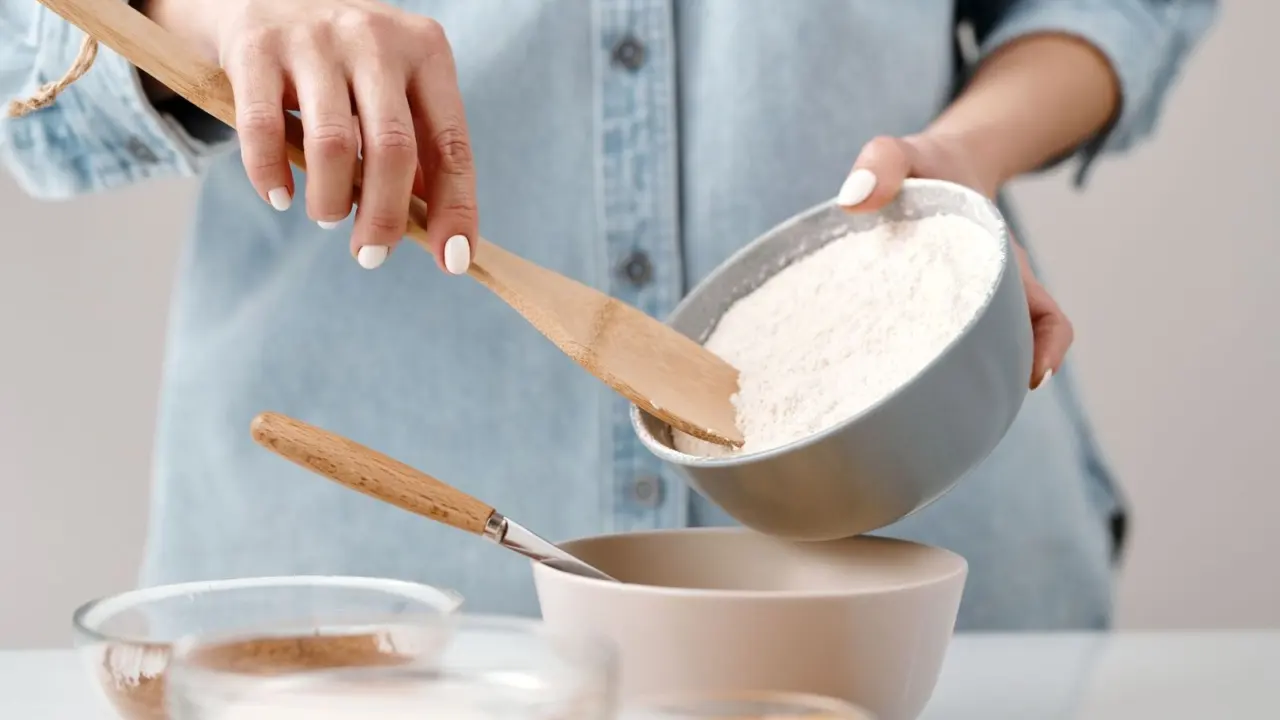
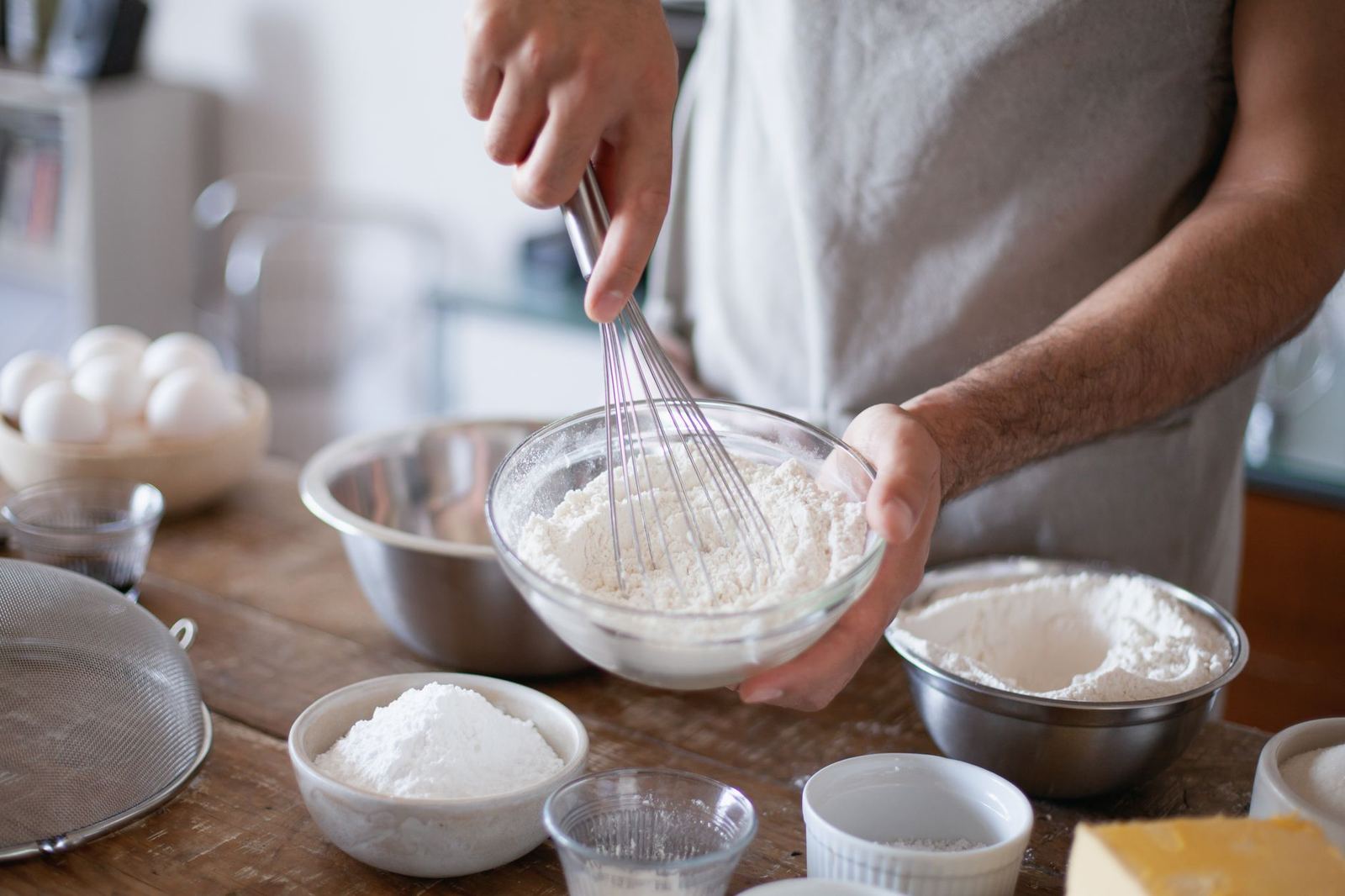
- Sift or whisk the two together until fully blended.
- Measure again to confirm you still have a full cup.
One recipe from The Make Your Own Zone says to sift the flour and cornstarch together four times. Even one or two passes help, because uneven cornstarch means uneven texture.
Weighing it for better accuracy
A scale is more reliable than cups, since scooped flour can pack down. King Arthur’s version is to “Whisk together 3/4 cup + 2 tablespoons (105g) all-purpose flour and 2 tablespoons (14g) cornstarch.”
If you are scaling up, the same one-for-one ratio holds. For 3 cups of flour, one recipe says to take away 6 tablespoons and add 6 tablespoons of cornstarch.
Tips for getting the best result
- Mix thoroughly. Whisking or sifting spreads the cornstarch evenly so no patches stay dense.
- Level your cups. Spoon flour into the cup and level it rather than scooping.
- Prepare the mixture first. Blend it before you start so the recipe’s timing is not disrupted.
- Treat it as an approximation. It lowers protein but will not match a milled cake flour exactly.
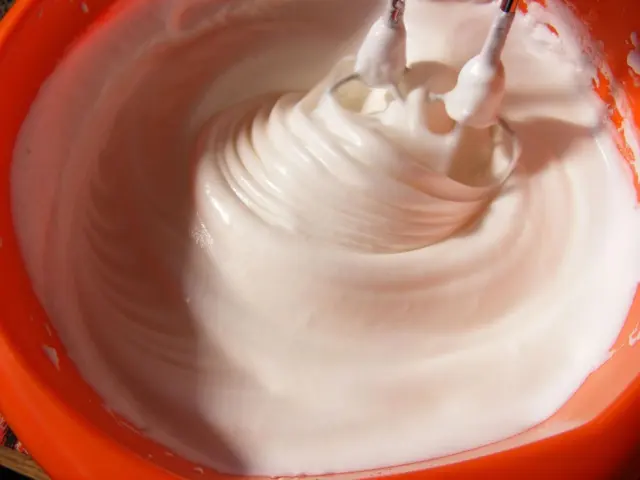
Light batters also depend on air. If your recipe uses a meringue, see how to whip egg whites to stiff peaks, and if it relies on leavening, read about baking powder vs baking soda so the rise is not lost.
None of these steps takes long, and together they remove most of the guesswork. Keep a note of what worked in your own kitchen, because ovens, bowls and brands of flour all vary, and a small record saves time on the next bake.
Using the blend in light, soft desserts
Soft sponges, chiffon cakes and roll cakes ask a lot of their flour. The batter has to hold air, stay gentle, and bake into a crumb that feels almost damp on the tongue.
The homemade blend suits these recipes well when you handle it with care. Here is a short routine to follow:
- Blend the flour and cornstarch before you crack any eggs.
- Fold the dry mixture into the batter in small additions, using a wide spatula.
- Stop folding once no dry streaks remain, since extra mixing builds gluten and works against the tenderness you were after.
- Bake straight away, so the trapped air does not leak out while the batter waits.
The cornstarch lowers the protein in the mix, but technique still decides how soft the cake turns out. A gentle hand with a good blend usually beats a rough hand with perfect flour.
Common mistakes to avoid
Most problems with this swap come from small slips rather than the idea itself. Check these before blaming the recipe:
- Skipping the removal step. Adding cornstarch on top of a full cup gives you too much dry material and a different texture.
- Using the wrong powder. Cornstarch is the starch the sources use here, so do not swap in baking powder or baking soda by accident.
- Under-mixing the blend. Sift the flour and cornstarch together to ensure they are well mixed.
- Measuring loosely. A heaped cup of flour throws the ratio off, which is why the weight version is easier to repeat.
If a bake still turns out heavier than you hoped, look at the rest of the method as well. Whipped eggs, oven heat and mixing time all matter as much as the flour.
Making extra, and when to skip the swap
If you bake soft cakes often, mix a larger batch and keep it ready. The scaling rule is the same as for a single cup: for every cup you start with, take out 2 tablespoons of flour and put in 2 tablespoons of cornstarch.
Store the blend in a clean, dry, labelled container so you can tell it apart from plain flour.
Keep in mind that the sources here do not give a shelf life for the blend, so mix only what you expect to use within a reasonable time and use your own judgement on freshness.
There are also times when the swap is not worth making. If a recipe was written for all-purpose flour, use all-purpose flour. Swapping in cake flour or a substitute there can change the structure, so keep to what the recipe asks for.
Cake flour is worth buying if you bake delicate sponges often. For an occasional bake, the homemade blend is a sensible stand-in.
Frequently asked questions
Can I use all-purpose flour alone instead of cake flour?
Show answer
You can, but the crumb will usually be a little firmer. Adding cornstarch, as above, lowers the protein of the mixture and gets you closer to cake flour.
How much cornstarch do I need per cup?
Show answer
Use 2 tablespoons of cornstarch in place of 2 tablespoons of all-purpose flour for every cup, per King Arthur’s weight version of 105g flour and 14g cornstarch.
Do I have to sift the mixture?
Show answer
Sifting or whisking is recommended so the cornstarch is evenly spread. One recipe sifts four times, but the goal is simply an even blend.
Is the substitute identical to real cake flour?
Show answer
No. King Arthur says the cornstarch lowers protein to mimic cake flour, so it is a close stand-in rather than an exact match.