Want a reliable mochi recipe that works in a home kitchen? Mix glutinous rice flour with water and sugar, microwave it, stir, and dust with starch. You will have soft, chewy mochi in minutes.
This guide is part of our look at japanese desserts, and it starts with the simplest version of the dough.
| Item | Value |
|---|---|
| Best flour for texture | Shiratamako |
| Substitute flour | Mochiko |
| Microwave start (1000 W) | 1 minute on high |
| Final microwave burst | 30 seconds |
| Mochi choking cases, one Japanese report | At least 128 hospitalised, 9 deaths |
The cooking times come from Just One Cookbook and the safety figures from NBC News. Figures can change, and microwaves vary, so check the sources before you rely on them.
What mochi is and what you need
Mochi is a pounded rice cake. Traditionally it is made from mochigome, a short-grain glutinous rice known for a sticky, elastic and chewy texture. At home, you can skip the pounding and use glutinous rice flour instead.
The ingredient list is short:
- Glutinous rice flour (shiratamako or mochiko)
- Water
- Sugar, which keeps the dough tender
- Potato starch or cornstarch for dusting your hands and board
- Optional fillings such as sweet red bean paste, or toppings such as kinako (roasted soybean flour)
Despite the name, glutinous rice has no wheat gluten. The word describes how sticky it is once cooked.
Check the bag before you buy. Glutinous rice flour is often labelled sweet rice flour, and it is not the same as ordinary rice flour, which gives a crumbly, non-stretchy result. Asian grocers and online shops usually stock both shiratamako and mochiko.
Gather your tools before you start: a microwave-safe bowl, plastic wrap, a silicone spatula, a tray lined with starch, and a small cup of water. Mochi sets quickly, so everything should be ready when the dough comes out.
Shiratamako or mochiko?
Two Japanese glutinous rice flours are used for mochi: shiratamako and mochiko. Just One Cookbook uses shiratamako because it yields the best texture, and says mochiko works if that is all you can find.
Shiratamako comes as small pearly granules. It gives a smoother, silkier, more elastic dough. Mochiko is a fine powder that is cheaper and easier to buy, and it makes a slightly firmer, more rustic mochi.
Both flours are made from glutinous rice, so the method is the same. Whisk shiratamako into the water first and let it dissolve before heating, because the granules need a little time to soften.
Step-by-step microwave method
The microwave is the easiest route. Steaming works as well, and Just One Cookbook says the choice is a personal preference. Before using the cooking times below, consult the linked Just One Cookbook recipe for its ingredient quantities and batch size.
- Whisk the flour, water and sugar in a microwave-safe bowl until no lumps remain.
- Cover the bowl with plastic wrap, not too tightly, so steam can escape.
- Heat on high. At 1000 W, the source suggests 1 minute.
- Stir with a wet spatula. The edges will set first, so bring them into the middle.
- Cover again and cook for 1 minute.
- Stir again, cover, and cook for 30 seconds to finish.
- Tip the dough onto a starch-dusted surface once it turns glossy and semi-translucent.
Wattage matters. The same source uses a 1200 W microwave for a 2.5 minute total cook, so adjust your timing to your own machine and watch the dough instead of the clock.
Shaping, filling and serving
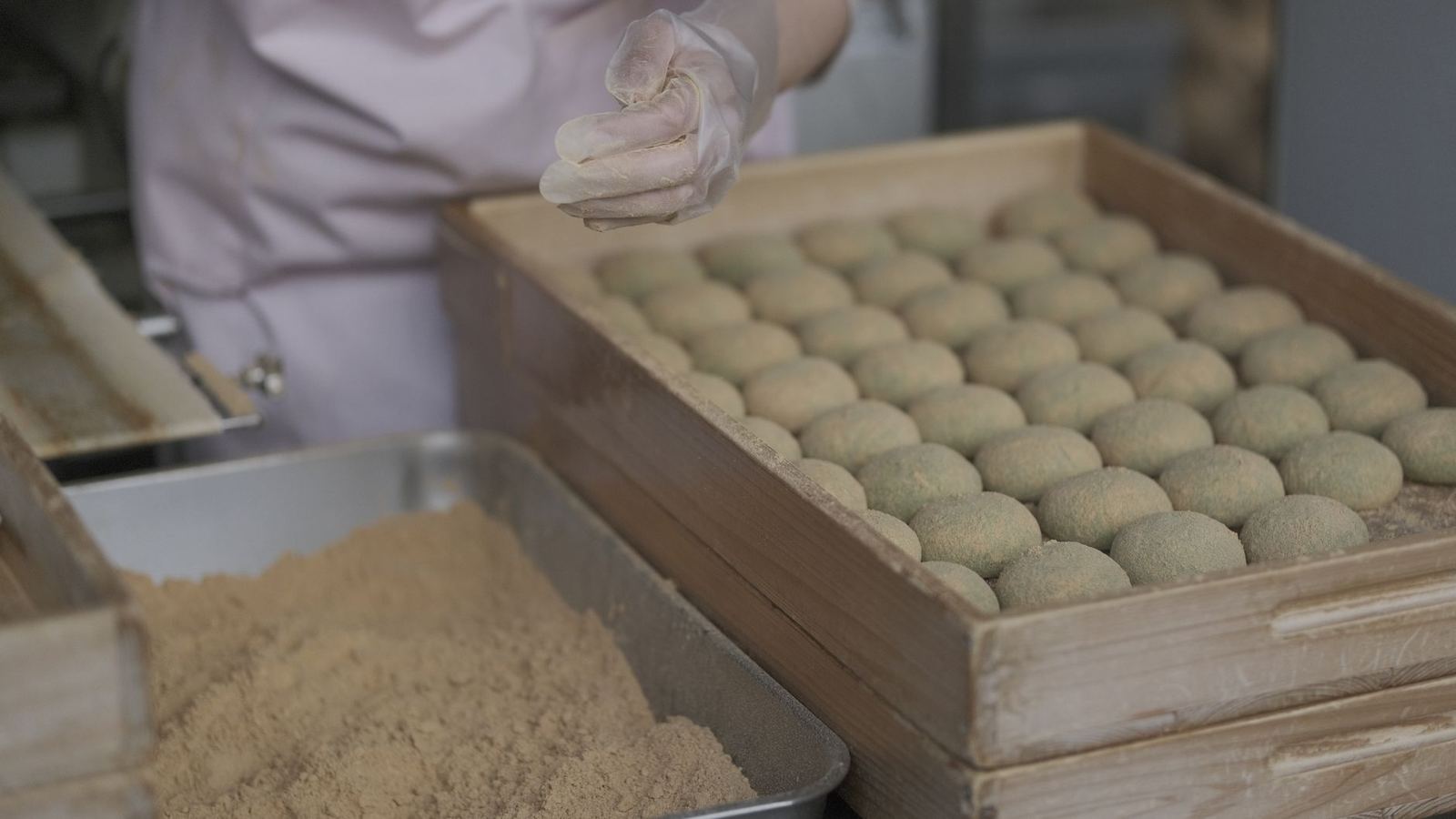
Work while the dough is still warm, because it stiffens as it cools. Dust your hands and the surface with starch, then pinch off pieces and flatten each into a disc.
For daifuku, place a spoonful of sweet bean paste in the centre and pinch the edges closed. Seal side down is the neatest way to rest each piece.
Other easy ways to serve plain mochi:
- Roll pieces in kinako with a little sugar
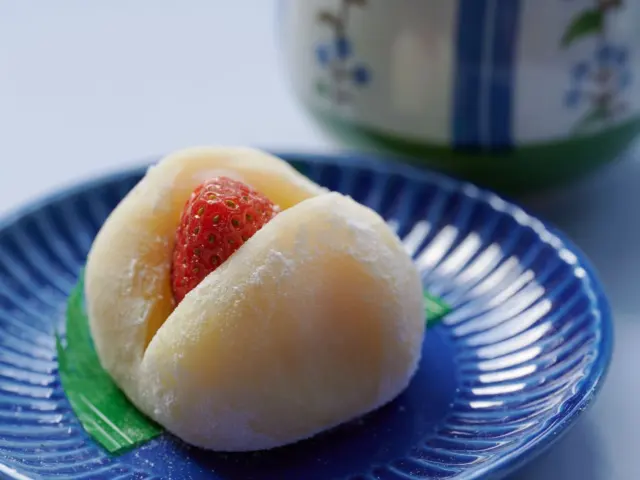
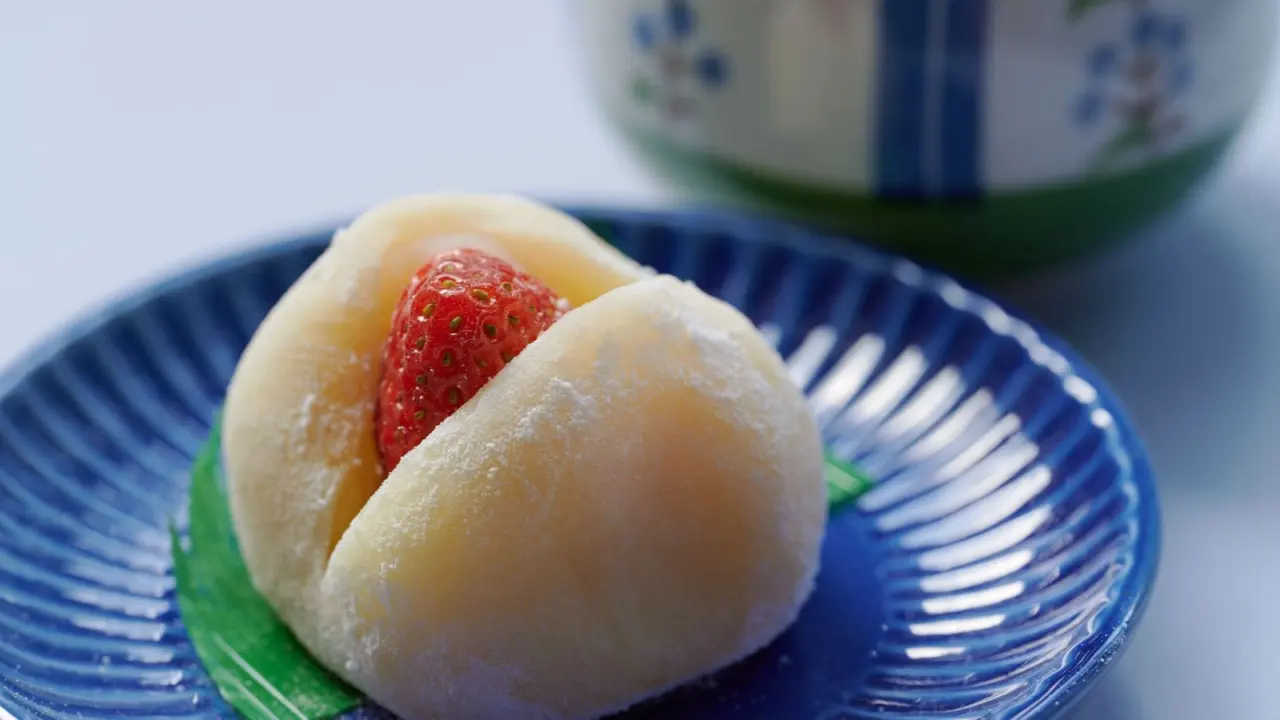
- Wrap around fresh strawberries and bean paste
- Drop into warm sweet red bean soup
- Wrap around a scoop of frozen ice cream for mochi ice cream
Brush off excess starch before eating. Too much leaves a dry, chalky coating.
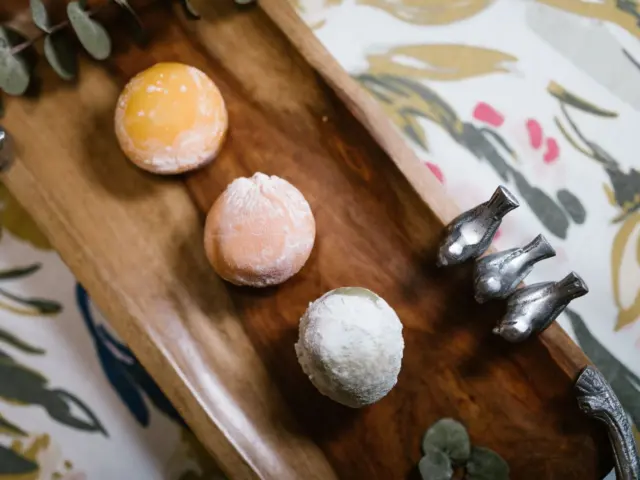
Mochi is usually eaten with green tea, whose slight bitterness balances the sweetness of the dough and the filling. Serve it fresh on a small plate, with a pick or small fork for each piece. A mixed plate of plain, kinako and bean-filled pieces looks lovely and suits a gathering.
If you plan to fill the mochi, make the filling first. Roll the bean paste into small balls, then rest them on a tray so they are ready the moment the dough is cooked. Fillings that are too soft or wet are hard to wrap, so firm them up in the fridge beforehand.
Tips for a better texture
Small habits make the biggest difference to the final chew. Use a bowl that is wide enough to stir in, and keep a small cup of water beside you to wet the spatula, since the dough sticks to anything dry.
Stir firmly between bursts. The dough cooks unevenly in a microwave, and thorough stirring moves the hot, set parts into the cool, raw parts so everything finishes together.
- Use the ingredient quantities from the linked recipe.
- Use a bowl you do not mind soaking afterwards, because cooked mochi clings to it. Warm water loosens it quickly.
- Lightly oil a knife or scissors before cutting the dough, or dip them in starch.
- Dust off surplus starch with a dry pastry brush before serving.
Flavour is easy to change. A little matcha powder whisked in with the flour turns the dough green and gives a gentle bitterness that suits sweet bean paste. A few drops of food colouring or a spoonful of fruit purée in place of some of the water also works, though a wetter dough needs a little extra cooking.
Keeping it soft and fixing problems
Consult your chosen recipe for storage instructions specific to plain mochi or your chosen filling.
If your mochi is hard or lumpy, check these first:
- Lumps: the flour was not fully dissolved before cooking.
- Raw, chalky centre: it needs another short burst, stirred between each.
- Too sticky to handle: use more dusting starch, and keep your hands dry.
- Hard after cooling: too little sugar, or it was chilled.
Mochi is also a pantry staple of wider Japanese confectionery. To see where it sits in that tradition, read about what is wagashi. If you want another sweet that uses bean paste, try our dorayaki recipe.
Eating mochi safely
Mochi can be a choking hazard, especially for older people and young children. NBC News reported the Yomiuri newspaper’s finding that at least 128 people were rushed to hospitals after choking on mochi, with nine dying.
The Tokyo fire department advised people to cut mochi into small pieces, chew slowly and learn first aid. Follow the same advice at home: serve small pieces, supervise children, and take your time.
Frequently asked questions
Can I make mochi with regular rice flour?
Show answer
No. Ordinary rice flour will not turn chewy. You need glutinous rice flour, sold as shiratamako or mochiko.
Do I need to add sugar?
Show answer
It is worth adding. Sugar keeps the dough tender and soft as it sits, so a plain unsweetened batch firms up faster.
How do I know the mochi is cooked?
Show answer
It turns glossy and semi-translucent, with no white, powdery spots left. If you still see white, cook it for a few more seconds and stir.
Can I steam it instead?
Show answer
Yes. Just One Cookbook says steaming and microwaving both work well and the choice is personal preference.