Worried your sponge will sink or turn rubbery? This castella cake recipe guide gives you the honey-sweet method: whip eggs well, fold in bread flour gently, and bake low and slow.
Castella belongs to the wider world of japanese desserts, and its technique is simple once you know where it goes wrong.
| Item | Value |
|---|---|
| Arrival in Japan | Portuguese traders, 16th century |
| Oven temperature | 160°C / 320°F |
| Bake time | About 50 minutes, uncovered |
| Warm egg mixture target | About 40°C / 100°F |
| Fridge storage | Up to 5 days |
| Freezer storage | Up to a month |
Figures come from Taste Of Asian Food and Arigato Travel. They can change, so check the sources before you rely on them.
What makes castella different from other sponge cakes
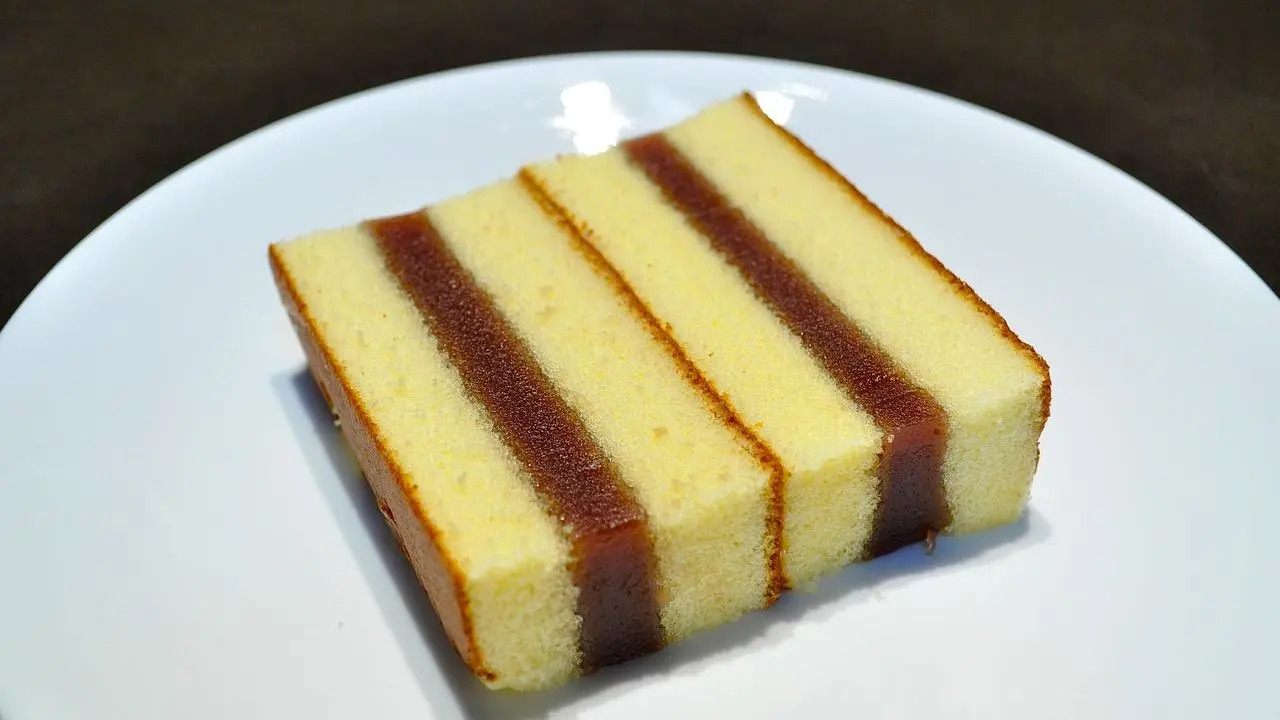
Castella is a dense, moist, slightly bouncy cake with a dark, caramelised top. Its texture comes from bread flour rather than cake flour, which gives soft, tighter crumbs that are sturdy and slightly gooey.
It also skips the usual helpers. The Japanese version is made without butter and baking powder, according to Taste Of Asian Food. All the lift comes from whipped eggs.
Portuguese traders introduced sponge cake recipes to Japan in the 16th century, and the cake then developed to suit Japanese tastes, as Arigato Travel explains. Its name is said to come from “Pão de Castela”, meaning “cake of Castile”.
From Portuguese ships to Nagasaki shops
According to Baking Heritage, “Portuguese sailors commonly carried this durable, delicious cake on long voyages, which is how it eventually found its way to the shores of Nagasaki.”
The same page says it was first presented as a luxury item. Ingredients such as sugar and eggs were rare, so the cake was reserved for nobles, aristocrats and wealthy merchants.
Today the cake is often introduced as “Nagasaki’s Castella” because it arrived in Nagasaki before spreading through the rest of the country. Arigato Travel notes that Fukusaya has shops in Tokyo and Yokohama.
Unlike many European sponges that need baking powder or yeast, authentic castella relies on careful whipping of eggs and precise baking. That is why technique matters more than a long ingredient list.
Ingredients and the role of honey
You need only a few things:
- Eggs, separated, with a clean, oil-free bowl
- Castor sugar
- Honey
- Bread flour, sieved
Honey does the work of the starch syrup (mizuame) used in many Nagasaki-style versions. One recipe author says: “I substitute it with honey as mizuame is hard to get outside Japan.”
Keep the honey modest. The amount required is small, just enough to give the castella its taste without making it too sticky.
If you like the anko side of Japanese baking, our anko recipe makes a good filling idea for slices, though classic castella is eaten plain.
Step-by-step technique
- Make the meringue. Separate the eggs, keeping the bowl free of oil and any trace of yolk, which can affect the volume. Add the castor sugar slowly as the whites gain volume, until they turn into a white cream.
- Add the yolks one by one. Whisk each yolk thoroughly until homogeneous before adding the next, because the meringue deflates if you add all the yolks in one go.
- Add the honey. Keep mixing in one direction until the batter is smooth.
- Fold in the flour. Sieve the bread flour over the batter and fold gently so you keep the air.
- Bake. Preheat the oven to 160°C/320°F and bake uncovered for about 50 minutes.
Warm eggs whip faster. The volume of the egg mixture increases faster if the egg and sugar mixture is warm, and it is best at about 40°C/100°F.
Frame, crust and oven tricks
Traditionally, castella is baked within a bottomless wooden frame.
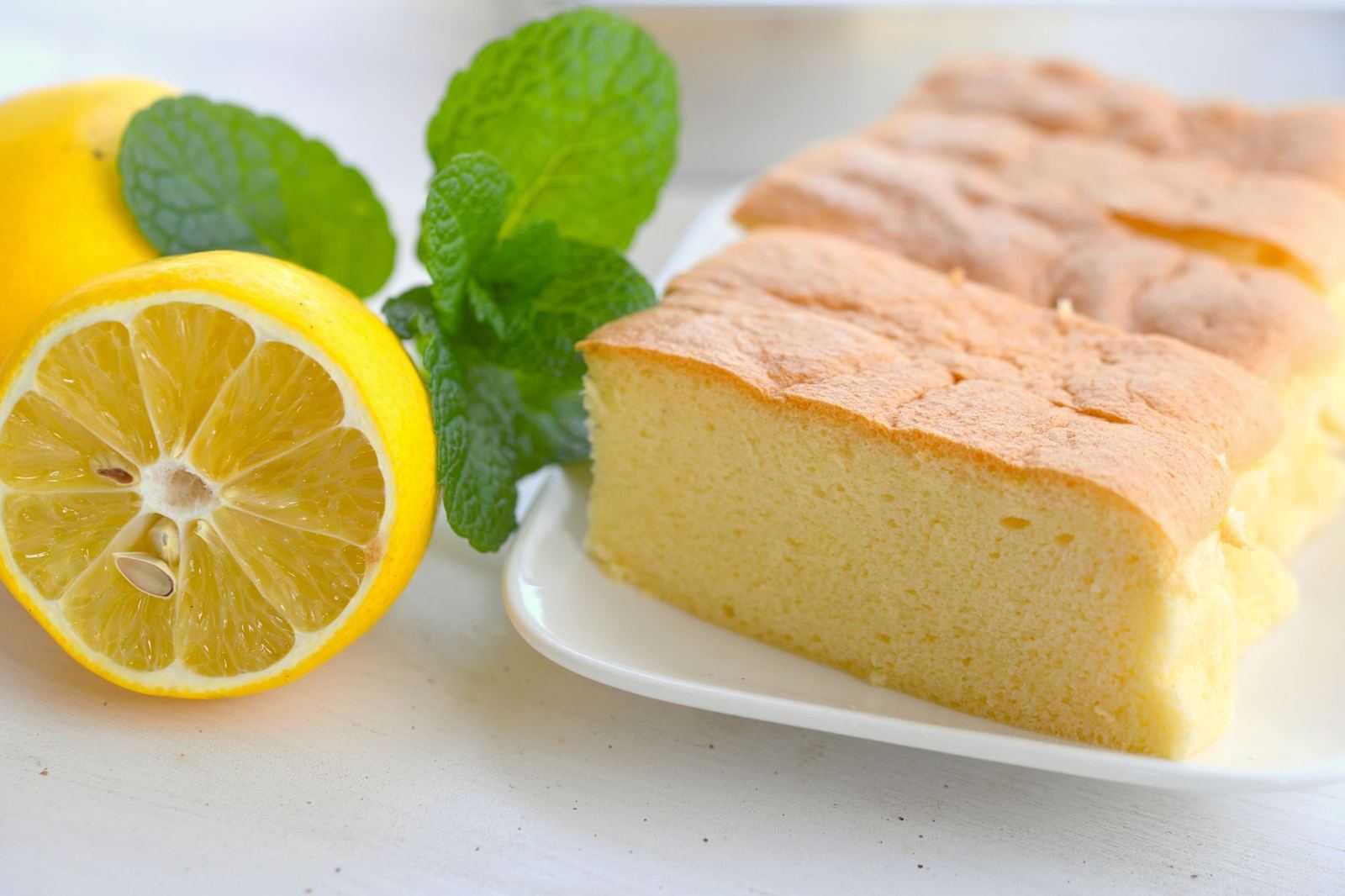
For a deep brown crust, raise the top heat late in baking. You can increase the top temperature to 200°C/390°F in the final ten minutes if the surface has not turned dark brown.
Underbaked castella will collapse at the center, so give it the full time rather than pulling it early.
Fixing common castella problems
Most failures come from the meringue or the oven. Work through this list before you blame the recipe:
- Collapsed centre: the cake was underbaked, so extend the bake time at the same low heat.
- Pale surface: to get a caramelised, dark crust like a Japanese bakery, increase the top temperature of the oven in the last five to ten minutes.
- Flat, runny batter: yolks were added all at once or the bowl held oil or yolk, so the meringue lost volume.
- Overflowing bowl: the meringue expanded more than expected, so use a larger bowl than you think you need.
Keep the oven low rather than hot. Castella is meant to bake gently so the crumb stays moist and even from edge to edge.
Because the cake has no butter or baking powder, every step protects the whipped air. Handle the batter calmly and fold in one direction.
Flavour variations to try
Once the honey version works, you can explore other flavours. Baking Heritage says variations such as matcha (green tea), honey and chocolate castella have emerged, while still honouring the historical roots of the cake.
Change one thing at a time, such as a little matcha sifted with the flour, so you can tell what affects the rise. Serve slices with tea, since the cake is sweet but not heavy.
Resting, storing and serving
Use cling wrap to seal the castella while it is still warm. This keeps the surface moist.
You can keep it in the fridge for up to 5 days, and it freezes well for up to a month. Slice it with a long, sharp knife.
If you enjoy light, jiggly bakes, compare this with our japanese cheesecake recipe, which also relies on a careful meringue.
A quick checklist before you bake
- Use a spotless, oil-free bowl for the whites.
- Add the sugar slowly and whip until the meringue is thick and white.
- Whisk each yolk in fully before adding the next.
- Fold the sieved bread flour in gently and stop as soon as it disappears.
- Line your frame or tin so the sides of the cake are insulated from harsh heat.
Running through these five points takes a minute, and it removes most of the usual causes of a dense or sunken castella. Patience at the whisking stage pays off more than any change to the oven.
Frequently asked questions
Why bread flour instead of cake flour?
Show answer
Bread flour gives castella its soft, tighter, slightly gooey and bouncy crumb, which is the main difference from the Taiwanese version.
Can I use honey instead of mizuame?
Show answer
Yes. Some home bakers substitute honey because mizuame is hard to get outside Japan.
Why did my castella collapse?
Show answer
An underbaked castella will collapse at the center. Bake it for the full time at a steady low temperature.
How long does castella keep?
Show answer
Up to 5 days in the fridge, or up to a month in the freezer.