Afraid your first Japanese cheesecake recipe will crack or collapse? Stay calm: bake it low, in a water bath, and cool it slowly. Those three habits give you a tall, jiggly, cotton-soft cake.
| Item | Value |
|---|---|
| Oven temperature (Spatula Desserts method) | 150°C (300°F) |
| Tin size used | 20 cm / 8-inch |
| Baking stages in that method | 3 stages |
| First stage, door closed | 30 minutes |
| Leftovers in the fridge | 2-3 days |
Figures come from Spatula Desserts and Takes Two Eggs. Recipes and ovens vary, so check the source before you rely on them.
What makes Japanese cheesecake different
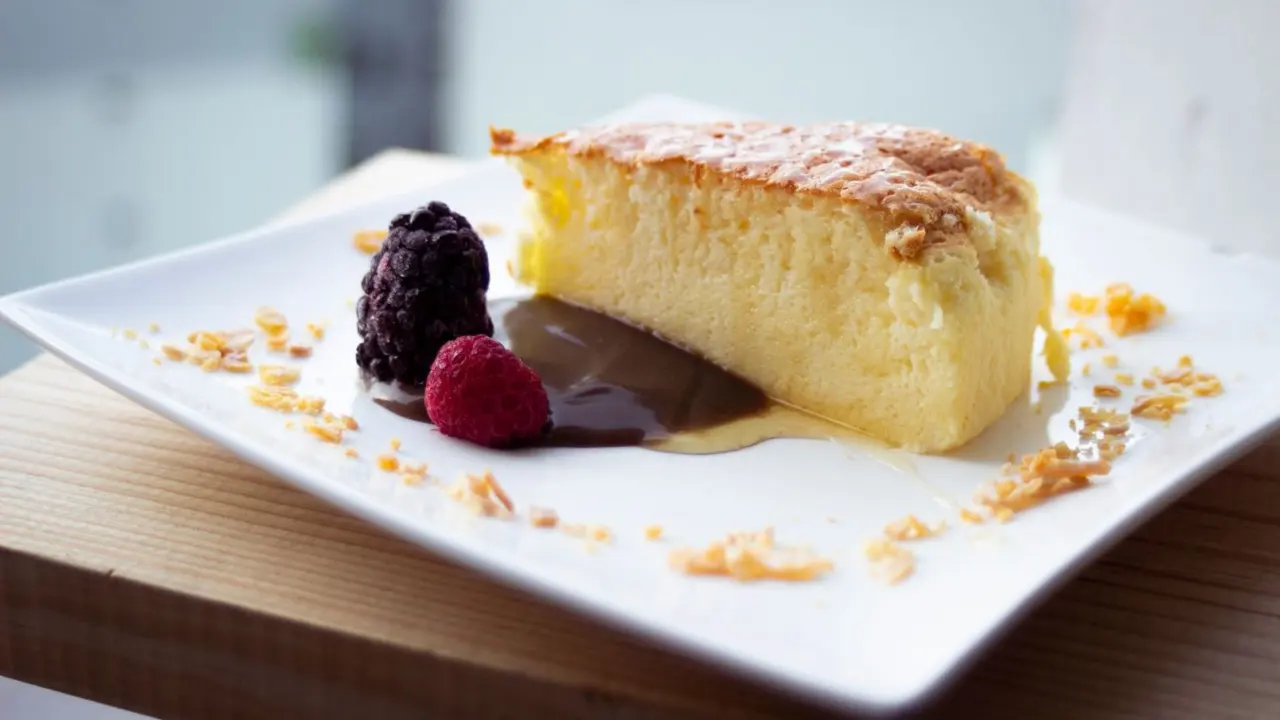
This cake sits between a classic cheesecake and a sponge. It is made with cream cheese, butter and milk, then lightened with a whipped meringue, so it bakes up airy rather than dense.
It is one of the best-loved japanese desserts for people who find New York style too heavy. The goal is a tall, evenly risen cake with a smooth top that holds its shape and wobbles when you nudge the tin.
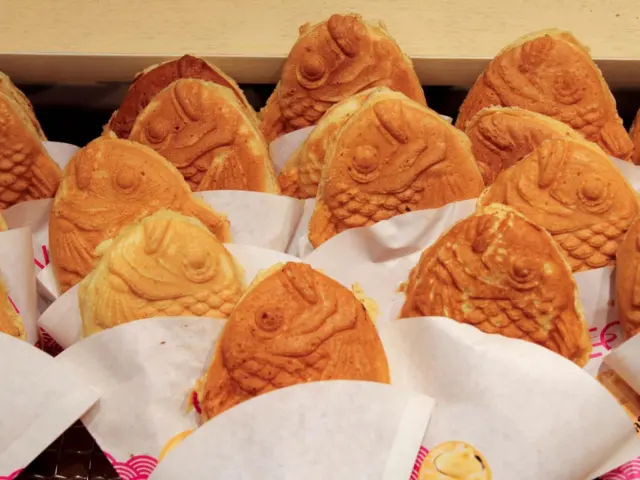
If you like soft, eggy bakes, the castella cake recipe is a natural next project, and the taiyaki recipe covers a more hands-on, griddled treat.
The texture comes from technique, not from exotic ingredients. Gentle heat sets the egg foam slowly, and the water around the tin keeps the edges from drying out before the centre is ready.
That is why the cake jiggles when it comes out of the oven and settles into a soft, moist crumb as it cools. Expect a lighter sweetness than Western cheesecake, with a mild tang from the cream cheese.
Ingredients and equipment
You need only a handful of everyday ingredients. Quality and temperature matter more than quantity.
- Cream cheese: full-fat, good quality, brick style rather than spreadable tubs.
- Unsalted butter and whole milk.
- Eggs, separated, brought to room temperature.
- Sugar for the meringue, plus a little salt.
- Cornstarch and a low-protein pastry flour; all-purpose flour also works.
- Vanilla and a few drops of lemon juice, if you like.
For equipment, use a deep tin lined with parchment, a roasting pan big enough to hold it, and an electric mixer. Spatula Desserts uses a 20 cm / 8-inch cake tin, and a springform pan should be wrapped in foil so water cannot leak in.
Step-by-step method
- Line the tin with parchment and set it in the roasting pan. Preheat the oven with the water bath in place.
- Warm the cream cheese, butter and milk gently over low heat or a double boiler until smooth. Takes Two Eggs says to whisk until it reaches about 130°F (55°C).
- Take it off the heat and whisk in the room-temperature yolks one at a time, mixing well after each.
- Sift the cornstarch, salt and flour together, then mix them in until the batter is smooth with no lumps.
- Whip the whites with sugar to soft, glossy peaks. Beat on low for a further moment to knock out large bubbles.
- Fold the meringue into the batter in portions, with a rubber spatula, so the mixture stays light and fluffy.
- Pour into the tin, tap out big bubbles, and pour hot water around it.
Fold gently and stop as soon as no streaks of white remain. Over-mixing knocks out the air that gives the cake its height.
Baking, cooling and the water bath
The method on Spatula Desserts bakes at 150°C (300°F) in three stages. First 30 minutes with the door closed, then another 20 minutes with the oven door slightly open, then a final 20 minutes with the door closed.
The page also says to aim for a gentle rise and a golden-brown top, fully coloured but not burnt. Takes Two Eggs starts at 300°F (150°C) for 30 minutes.
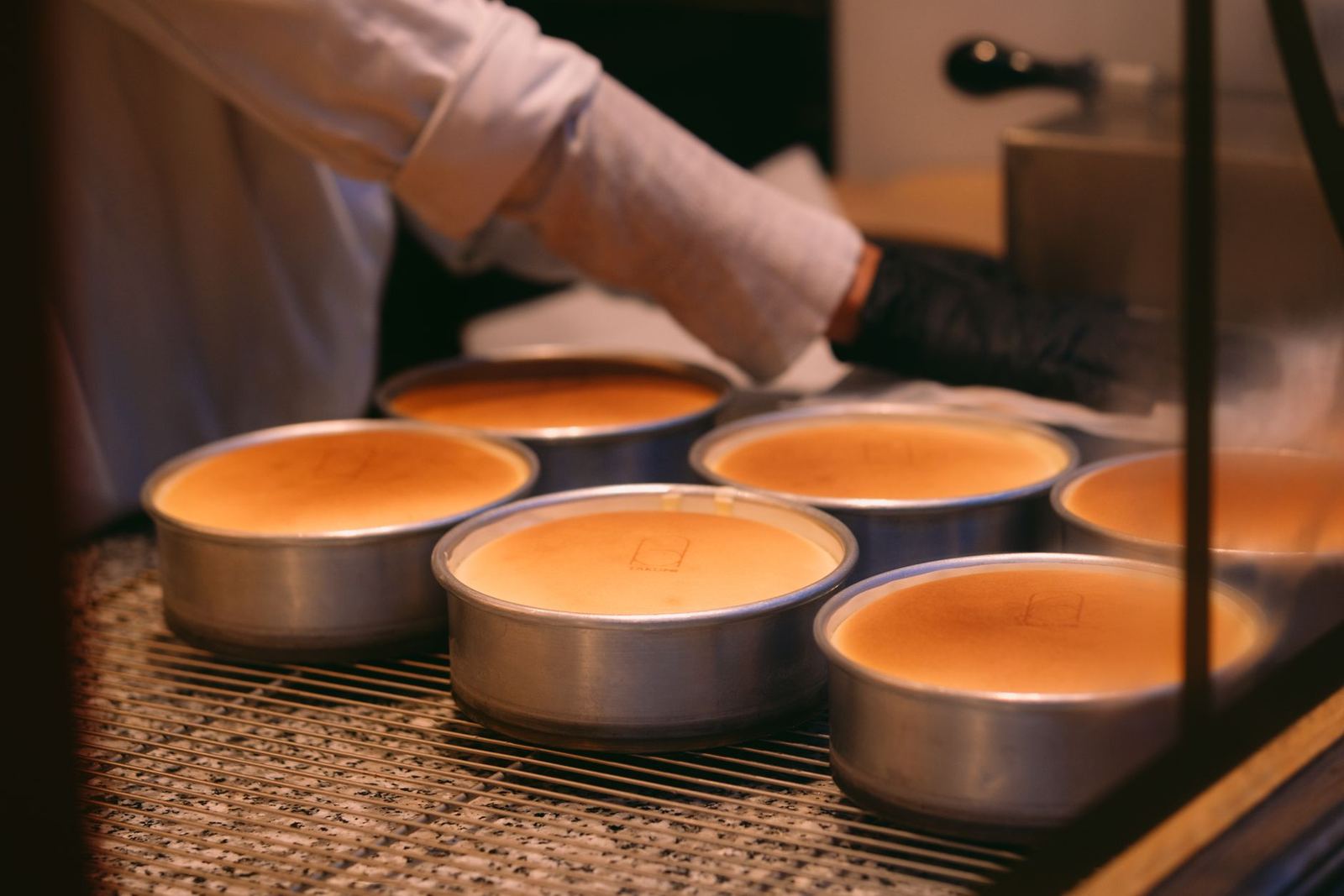
The water bath matters because, as Takes Two Eggs explains, it regulates oven heat and adds moisture, which helps prevent cracking. For cooling, turn off the oven, take the cake out of the water and leave it inside with the door cracked open for about 20 minutes.
Then lift it out gently and let it cool before unmoulding. Cold shocks are a common reason for a sunken centre.
Troubleshooting common problems
Most failures trace back to heat or air. Use this list to match the symptom to the cause.
- Cracked top: Spatula Desserts says the main reason for cracks is the oven temperature being too high. Lower the heat or move the rack down, and check your oven with a thermometer.
- Sunken or deflated cake: usually a sudden temperature change. Do not pull it from the oven early, and let it cool gradually with the door ajar.
- Wet bottom: water leaked into the tin. Wrap a springform in foil, or switch to a solid-base tin.
- Eggy smell: use fresh eggs and a little lemon or vanilla to soften it.
Ovens differ a great deal, so treat the first bake as a test. Note what happened, change one thing, and try again.
Tips for a taller, softer cake
Small habits add up in a recipe this delicate. Work through them before you start, and the bake itself becomes far less stressful.
- Room-temperature eggs: cold whites whip poorly and cold yolks can seize the warm cheese mixture.
- Clean bowl: any trace of grease or yolk stops the whites from building volume, so wipe the bowl and whisk first.
- Smooth base: sift the dry ingredients and mix until no lumps remain, because lumps are hard to remove once the meringue goes in.
- Bubble check: tap the filled tin firmly on the counter so large air pockets rise and pop before baking.
- Steady oven: avoid opening the door except where your method says so, since sudden drops in heat can make the cake sink.
Give the cake time. Rushing the cooling or lifting the tin out of the water too soon is the quickest way to lose that proud, domed top you worked for.
Also think about your oven. A home oven can run hotter than its dial suggests, and a cheap oven thermometer is a worthwhile purchase if cracks keep appearing. If the top browns too fast, loosely tent it with foil rather than raising the rack.
Serving and storing
Serve it warm for the softest, most souffle-like bite, or chilled for a firmer, creamier slice. A dusting of icing sugar or a spoon of fruit goes well, though the cake needs little else.
Spatula Desserts says leftovers keep in an airtight container in the fridge for 2-3 days. Let a slice come toward room temperature before eating so the texture softens again.
Frequently asked questions
Why did my Japanese cheesecake crack?
Show answer
Most often the oven was too hot, which makes the cake rise too fast. Bake low, use a water bath, and avoid opening the door unnecessarily.
Do I really need a water bath?
Show answer
Yes, for the classic texture. Takes Two Eggs says it regulates the oven heat and adds moisture, which helps prevent cracks.
Can I use all-purpose flour?
Show answer
Yes. Spatula Desserts prefers low-protein pastry flour but says all-purpose flour also works.
How long does it keep?
Show answer
Keep it in an airtight container in the fridge for 2-3 days, according to Spatula Desserts.